Summers always fly… winters walk.
In winter, no warmth, no light, no full day; night and morning blur together, everything is mist and twilight, the window is fogged and you cannot see clearly. The sky is a crack, the whole day is a cellar: the sun has the look of a pauper. Terrible season! Winter turns to stone the water of the sky and the heart of man.
I shall see the springs, the summers, the autumns,
And when the winter of monotonous snows arrives,
I shall close on every side the shutters and the doors
To build in the night my fairy-tale palaces.
Winter comes everywhere. In some places it lasts longer and in others shorter, as on our little tropical island, but all living creatures know that one half of the year is colder and darker than the other. Most of the mythologies we know are the magical and poetic interpretations that ancient peoples gave to the world around them, and one of the reasons they have not entirely disappeared in this age of science and technology is that the natural phenomena that inspired them keep occurring and keep filling us with wonder, even when we know how and why they occur.
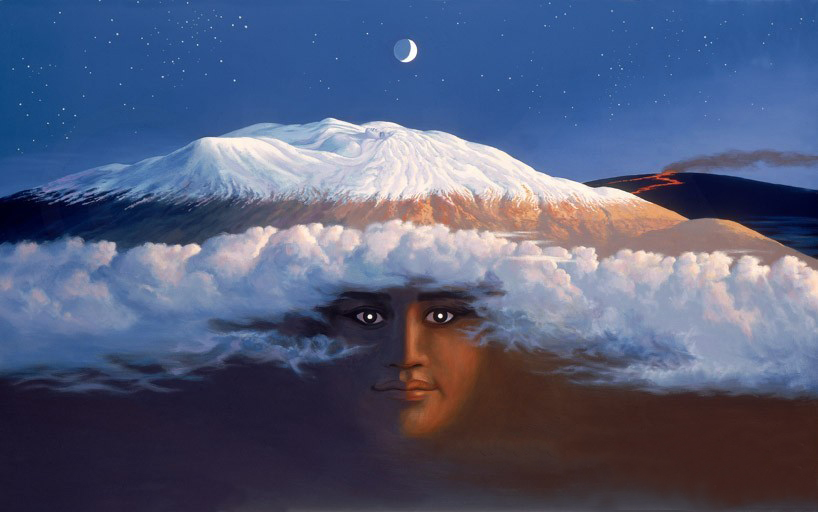
Nature shapes to a great extent the pantheons and mythological systems of each place, so that in a tropical country like ours, Obatalá, the orisha who governs all things white, snow included, has little work to do with that element. Many warm countries with high snow-capped peaks have a deity devoted exclusively to those places, such as the Hawaiian Poliahu, who contests the volcanic summits with her sister Pele. And what can be said of Inuit myths, which tell of how the first woman drew all the animals out of a single hole in the ice.
But it is the figures, stories and traditions that come and go with winter that concern this work. Winter forms part of the great cycle of the birth and death of the Sun, representing in particular its death or state of greatest weakness, which reaches its critical point at the solstice, on the longest night of the year, around 21 December. Yet this death implies an immediate rebirth, for from the following day onward the days will begin to grow longer, heralding spring. Hence there is little or nothing of mourning in winter celebrations, and a great deal of rejoicing.
The arrival or return around this date of a pagan solar god or goddess led the Western Church to celebrate the birth of Jesus of Nazareth on 25 December as well, beginning in the fourth century. Thus Christian Christmas (from nativitas, "birth" in Latin) is nothing more than an attempt to monopolize the concept of the "sacred birth," an event that all cultures around the world — even in the southern hemisphere, where it does not even occur in December (there the solstice falls in June) — have venerated since the dawn of time.
The winter solstice in the northern hemisphere
These and other examples from around the world show the importance of the solstice date to ancient peoples, who, despite everything, saw winter as a necessary "evil," even a welcome one.
The Soyal of the Hopi Indians
Winter feasts and rites take place all across the northern hemisphere at this time. It is when the Hopi Indians of North America perform the Soyal to help and guide the return of the sun, which is the face with which Taiowa looks upon the world. During this ceremony, silent and solemn, the entire myth of creation is re-enacted in the dark interior of a kiva, an underground chamber designed for this purpose. On the ninth day the Soyal altar is erected: it is conical, about three feet tall, and made of branches covered in cotton. The height and the white colour of the cotton represent the amount of snow that must fall during the winter months to penetrate the soil deeply enough to germinate the seeds that will be sown in spring.
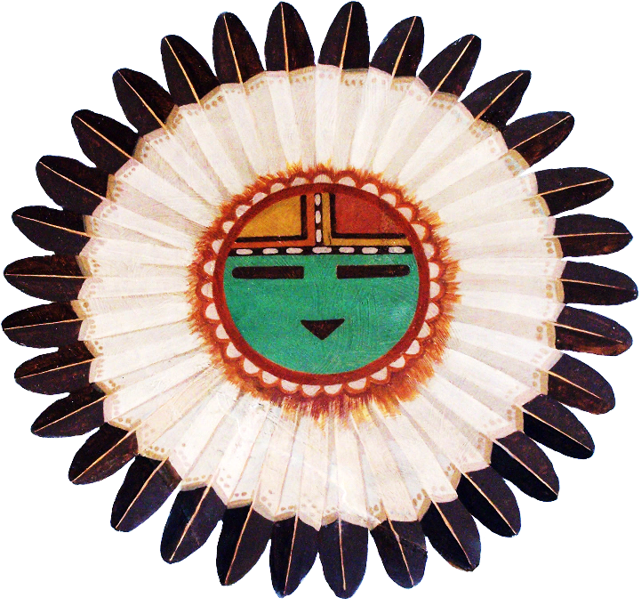
The Hopi once sacrificed a virgin girl, but in later times only the name of the chosen girl is whispered to a páho, or special prayer stick, and she is supposed to die within four years. Such physical, spiritual or symbolic sacrifice illustrates one of the great hidden meanings of Soyal: we stand at the winter solstice, the moment when all life is reborn, yet life must be paid for with life; the germinated seed must lose its identity as a seed so that a new form may emerge. The earth itself must die periodically to ensure rebirth.
It is also during this winter feast that the kachinas, the spirits, come from the distant stars to take part in the rituals and dance alongside the Hopi until midsummer, when they return to the spirit world, where, in turn, winter and the Soyal of that realm are about to begin.
The Iranian Yalda
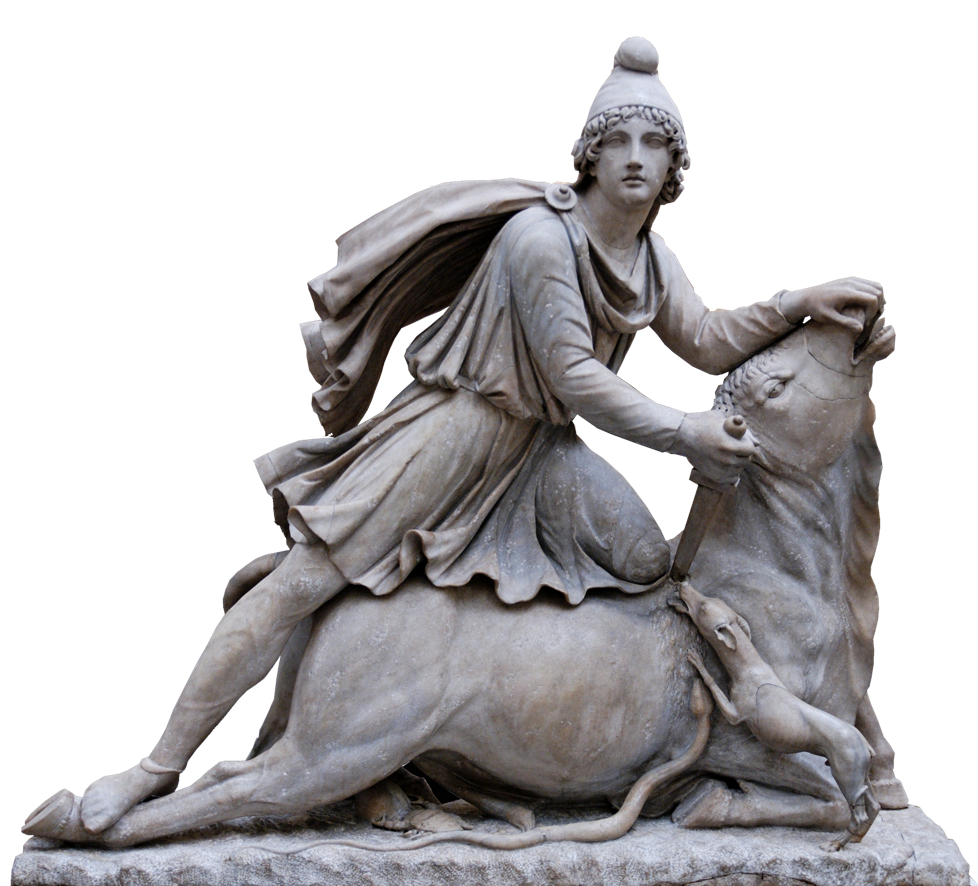
Mithra was a solar god shared by Persia and India. In Persia, within Zoroastrianism, he was the son of Ahura Mazda, though the Zoroastrians worked hard to suppress his cult in favour of his father's. The birth of Mithra was also celebrated on 25 December, even in Rome, where he was called Sol Invictus. This date fell around the winter solstice, when Iranians celebrate Yalda ("nativity" in Syriac). The longest night of the year, the last of the Persian month of azar, was said to belong to Ahriman (Evil), when he reached his greatest power; and the following day, the first of the month of dey, belonged to Ahura Mazda (Good).
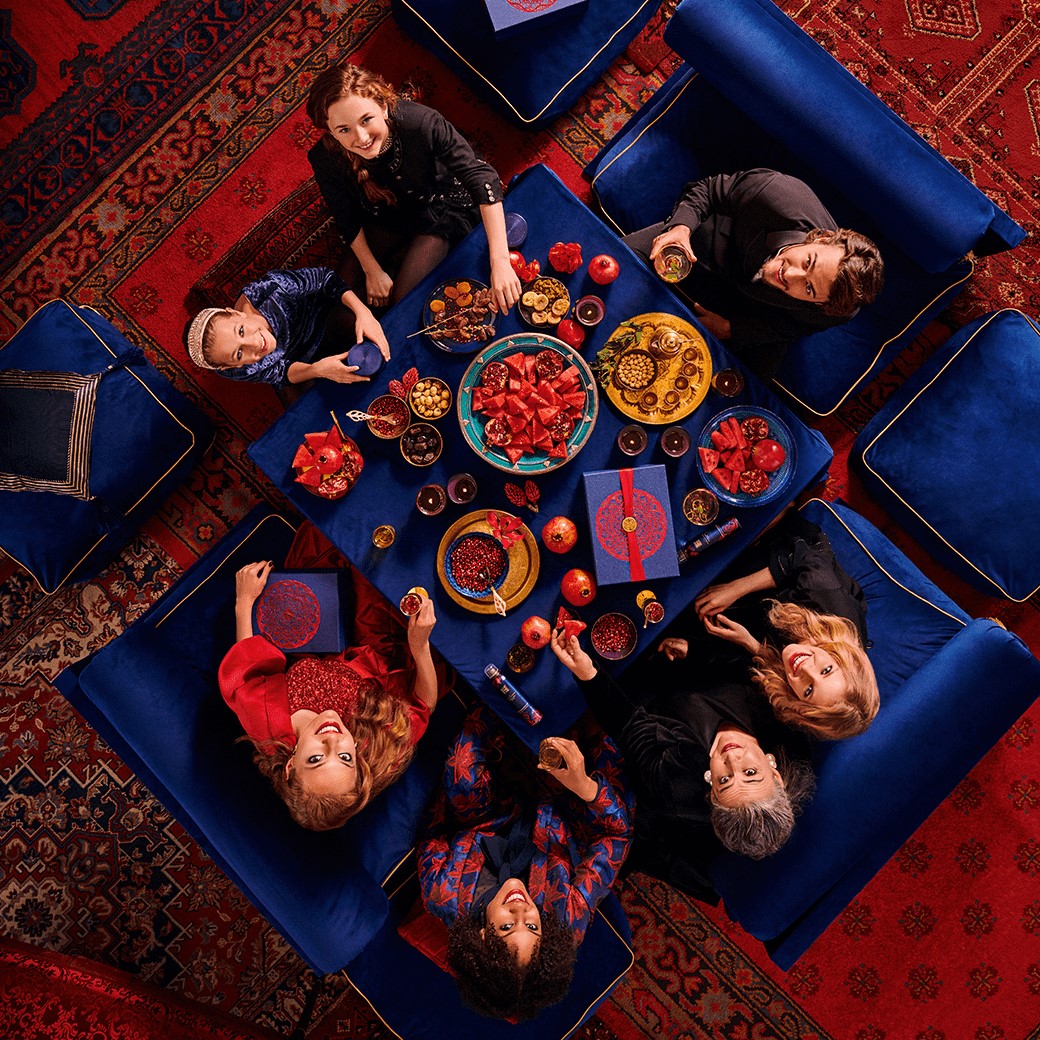
Although with the establishment of Islam Yalda lost all its religious meaning, for Iranians it remains a time for gathering with family and friends. Once everyone is seated around the korsi, the low table with its brazier, the eldest member explains the reason for the celebration and recounts stories from the Shahnameh, the Book of Kings, and other tales of ancient Iran. In this way they continue to commemorate the birth of the god Mithra, the end of the cold season and the triumph of the Sun over Darkness. Mithra is the light of the universe, mediator between heaven and earth, symbol of truth and justice; and so, throughout that night, they keep the fire burning in order to draw his benevolence, to attain immortality and salvation on the day of final judgement.
At Yalda, fruits and nuts are eaten, and pomegranates and watermelons are particularly important. The red colour of these fruits symbolizes the crimson hues of dawn and the brightness of life.
YOU MIGHT ALSO LIKE TO READ:
Celtic and Norse festivals
Druids or neo-druids call the winter solstice Alban Arthan, the Light of Arthur, and symbolize the birth of the Sun with the birth of the hero; however, there is no evidence of how the ancient Celts celebrated the solstice, and the modern rituals are an invention of the Welsh poet Iolo Morganwg.
A great many auspicious and protective rituals take place everywhere at this time. In Scotland, the last day of the year is celebrated as Hogmanay, and from midnight onward the arrival of the "first foot" is awaited: the first person to enter the house will bring gifts of silver, salt, coal, dark bread, and so forth — symbols of good fortune, especially if the visitor is a tall, dark-haired man. In one fishing village, on 11 January (New Year's Eve by the Julian calendar), the burning of the clavie takes place — a wooden barrel that is carried through the entire village to an altar on a headland, where it burns down completely and people rush to find a burning ember with which to light the new year's fire in their country homes, since the wood of the clavie keeps spirits and witches at bay. To these Scottish fire rites is added the burning of a Viking longship, as happens in late January during the historic Up Helly Aa festival in the Shetland Islands.
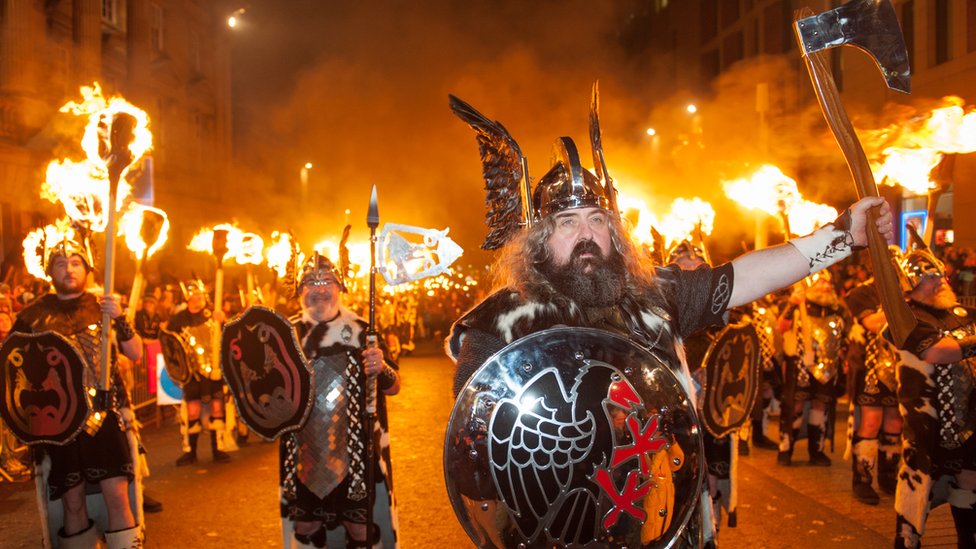
Indeed, one of the probable origins of these customs in the British Isles is Viking influence. The ancient Germanic peoples celebrated Yule or Yuletide, which gave its name to the months Giuli, "before Yule," and Aefterra Giuli, "after Yule."
Among Odin's many names were Jólfaðr (Old Norse for "Father of Yule") and Jólnir ("the Yule one"). Many other passages in the Eddas and the Norse sagas attest to the antiquity of this celebration, which must have stretched from mid-November to mid-January. Among the traditions of pagan Yule is the burning of a log throughout the night and the scattering of its ashes over the ploughed field; whatever does not burn is kept until the following year as a charm against fire and storms. The "Yule Log," Frazer tells us in The Golden Bough, "was probably nothing but a duplicate, the indoor double, of the midsummer bonfire, kindled within doors instead of in the open air on account of the inclemency of the winter season. This view of the Yule log is supported by the many superstitions attaching to it, superstitions which have no apparent connection with Christianity, but bear the unmistakable stamp of a pagan origin…" The fact is that this and other traditions that persist even outside Europe — the Yule goat, the Christmas tree, the Christmas ham, and so on — were bequeathed to us by the Germanic peoples.
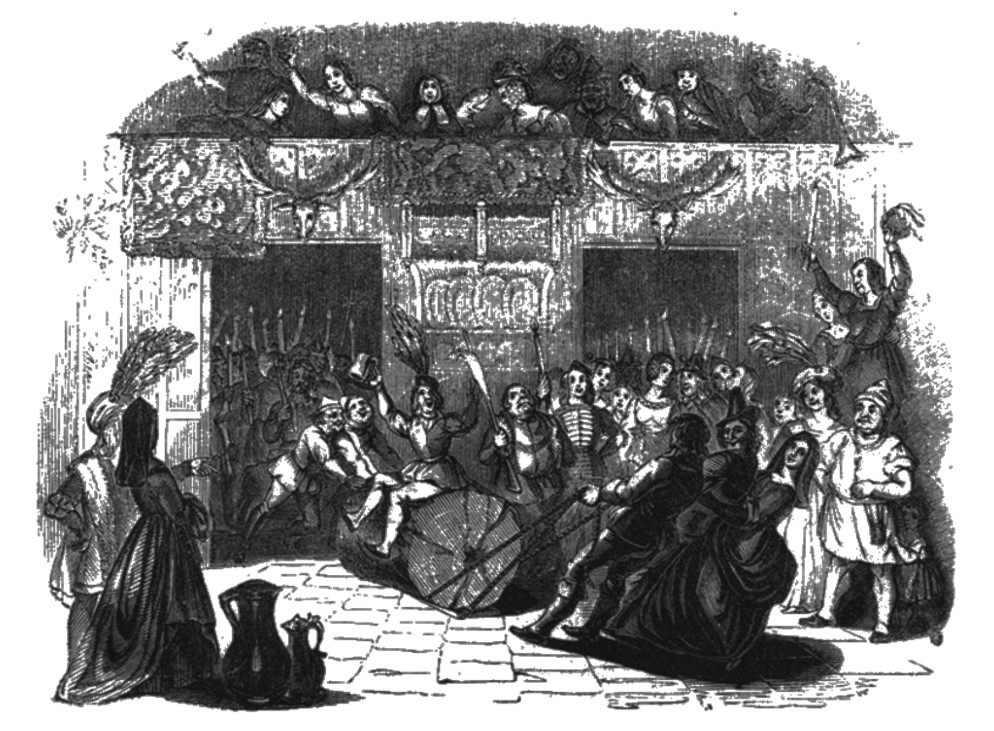
Associated with Yule was the Anglo-Saxon celebration of Modranicht, referred to by the Benedictine monk Bede the Venerable (672/3–735) in his work De Temporum Ratione. Interpreted as "Mothers' Night," it would have been a ceremony involving sacrifices and invocations to the dísir and matronae, groups of feminine familial spirits — a form of ancestor worship.
Korochun and Koliada of the Slavs
For their part, the Slavs call the night of the solstice Korochun and the following day Koliada. According to the neopagan Slavic tendency to turn festivals into eponymous deities, Korochun is identified with another deity, Khors, the old sun vanquished by darkness, on the point of beginning his journey through the underworld; and Koliada with Dazbog, the newly born and victorious new sun.
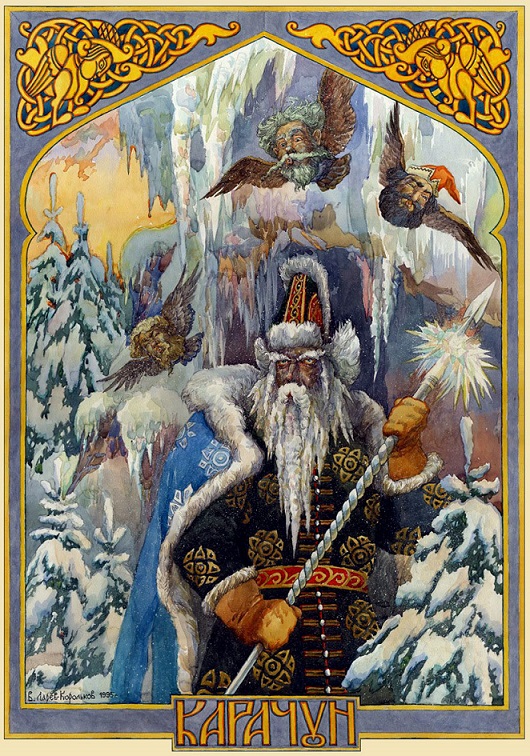
During the night of Korochun, the Slavs would light bonfires — some in cemeteries — to keep their dead warm, and would sing and dance around them. The khorovod in particular seems well suited to the occasion: a combination of singing and circular dancing that is highly characteristic and whose name derives from khor, "solar circle," and vodit, "to lead." During Koliada, postponed to Christmas Eve by Christianity, in addition to the bonfires, the tradition would have been to dress up in costumes and sing koliadki (carols) from house to house, wishing neighbours good luck throughout the night.
YOU MIGHT ALSO LIKE TO READ:
The sacrifices to Beiwe, the solar deity of the Sami
Of the celestial gods of the Sami people, undoubtedly the most important is Beiwe, whose name has regional variants: Beaivi, Biejvve, Beivve, Bievve or Biejje. This is the god or goddess of the sun, represented almost always at the centre of shamanic drums as a diamond with four rays (the rays representing the sun's capacity to shine upon the four quarters of the sky). There is some debate over Beiwe's sex: some sources give her as a goddess, probably under the influence of Norse mythology, while others refer to a male god. In any case, Beiwe is an important ancestor, since the Sami people call themselves "children of the sun."
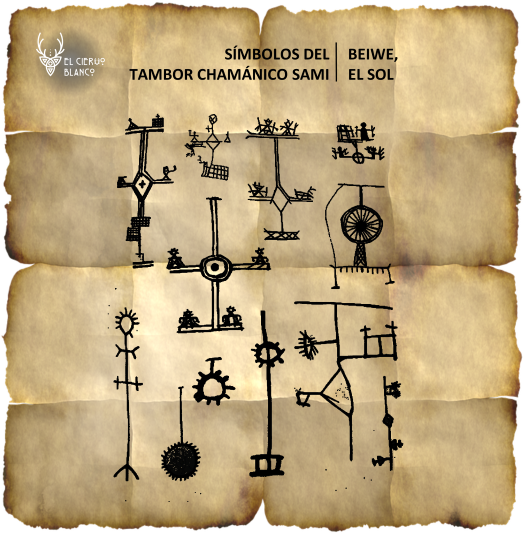
Lars Levi Læstadius (1800–1861) confirms that even in his time the cult of the sun was a memory of former days, and not even a few superstitions about it remained. Chroniclers record that the Sami had sacrificed white female animals so that the sun would shine, and on Midsummer Eve they ate porridge or a "sun pudding" in its honour. Others report that when the sun appeared after a long absence, the Sami anointed their doorways with butter so that the nourishment would give strength to the deity. Some commentators believe that the custom of threading pieces of meat onto hoops or rings and leaving them on a high platform behind the kota was a solar offering. From Beiwe they asked for the grass to grow and for the reindeer to give plentiful milk during summer. They also prayed to Beiwe for the healing of certain illnesses, above all nervous and mental ones, sometimes caused by the long months of polar night.
YOU MIGHT ALSO LIKE TO READ:
The mythological origin of winter
The rape of Persephone
The Greek myth that explains the origin of winter and the other seasons is the one that tells of the abduction of Persephone by Hades, the god of the underworld. According to classical mythology, Kore was the daughter of Demeter, the goddess of agriculture. Hades seized the girl as she was gathering flowers in a meadow at Eleusis and carried her as his queen down to Tartarus. Demeter searched long for her daughter, and in the meantime, in her anger, she cursed the earth, preventing the trees from bearing fruit and the grasses from growing, until the race of men was on the brink of extinction.
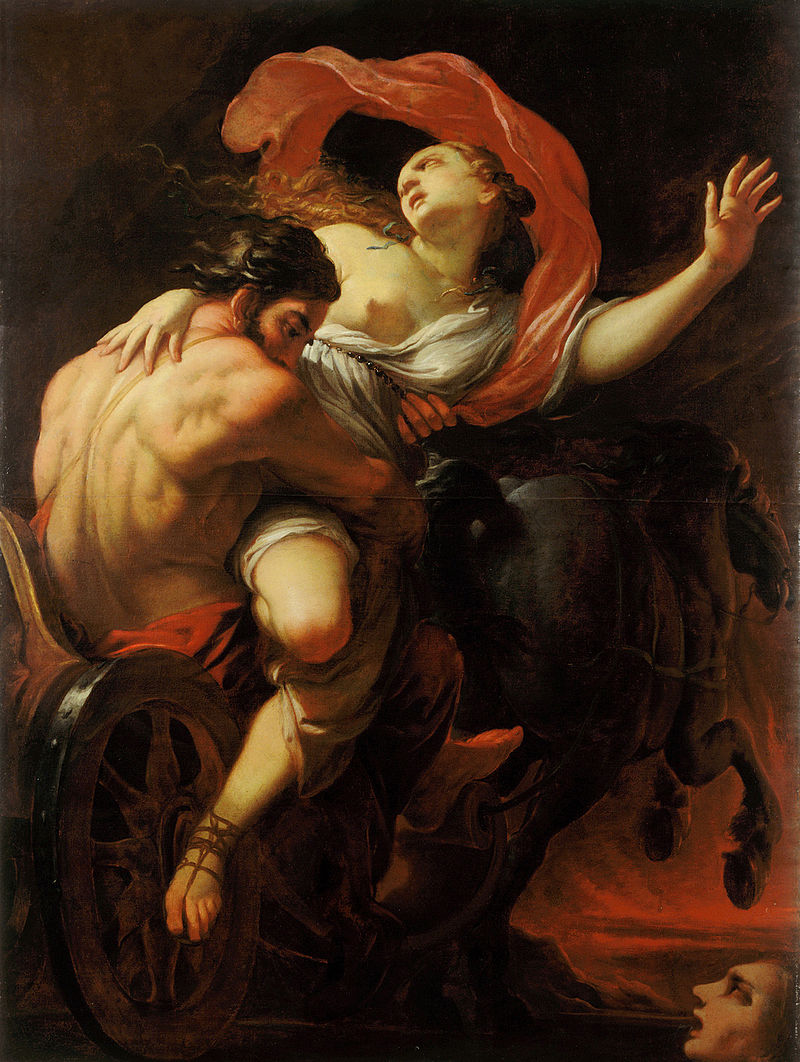
Zeus interceded and promised Demeter that she would have her daughter back, on the condition that Kore had not tasted the food of the dead. Hades would have let her go had Kore refused every morsel since her arrival, but at the last moment Ascalaphus, one of the gardeners of Tartarus, betrayed her, reporting that he had seen her eat seven seeds of a pomegranate. In light of this new circumstance, it was decreed that Kore, bearing the title of Persephone, would spend a part of the year (one or two thirds, depending on the source) with Hades, and the remainder with her mother on Olympus. During the time she remained in the underworld, the earth would wither and grow cold, only to turn green again after her reunion with Demeter.
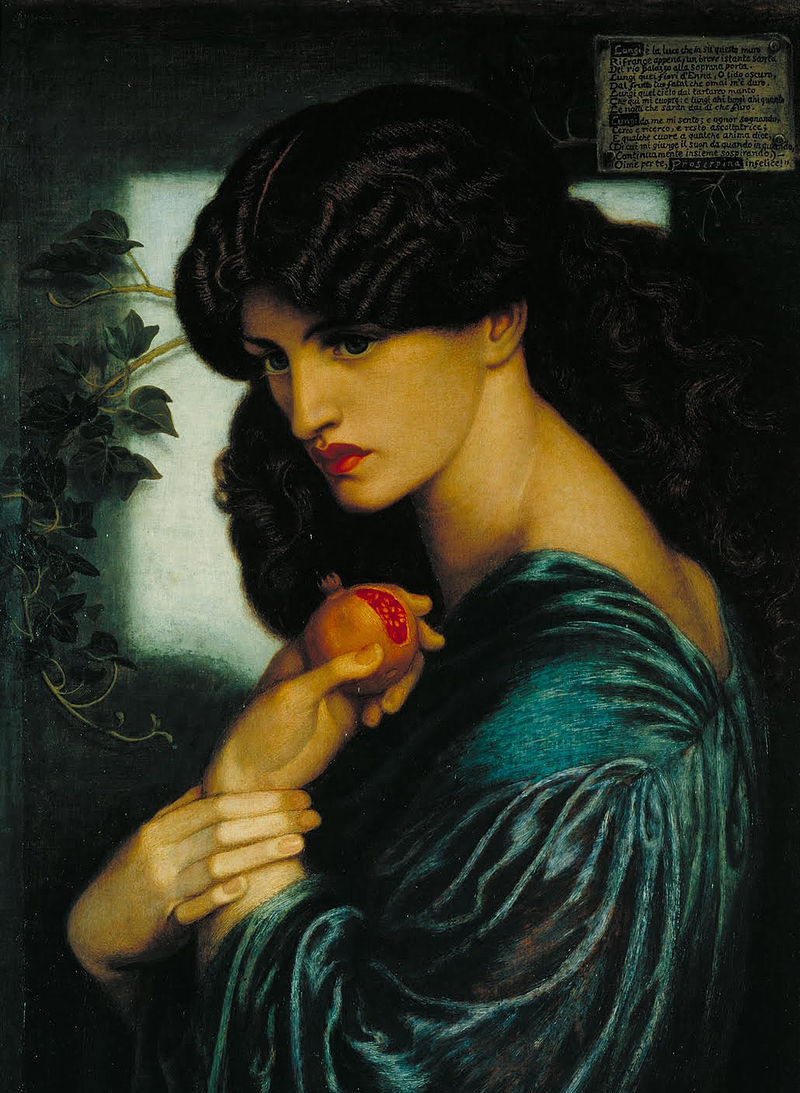
Rossetti, 1874
In this way the Greeks accounted for the annual cycle of the seasons, but this myth carries many other layers of symbolism. In the telling of it, Hecate is usually left out — the famous goddess of witches, who gives Demeter the first clue as to her daughter's whereabouts, accompanies her in her search, and undertakes to watch over Persephone in the underworld. According to Robert Graves in The Greek Myths: "Kore, Persephone, and Hecate were clearly the goddess in triad as the Maiden, the Nymph, and the Crone, at a time when only women practised the mysteries of agriculture. Kore represents the green grain, Persephone the ripe ear of grain, and Hecate the harvested grain… But Demeter was the general title of the goddess…"
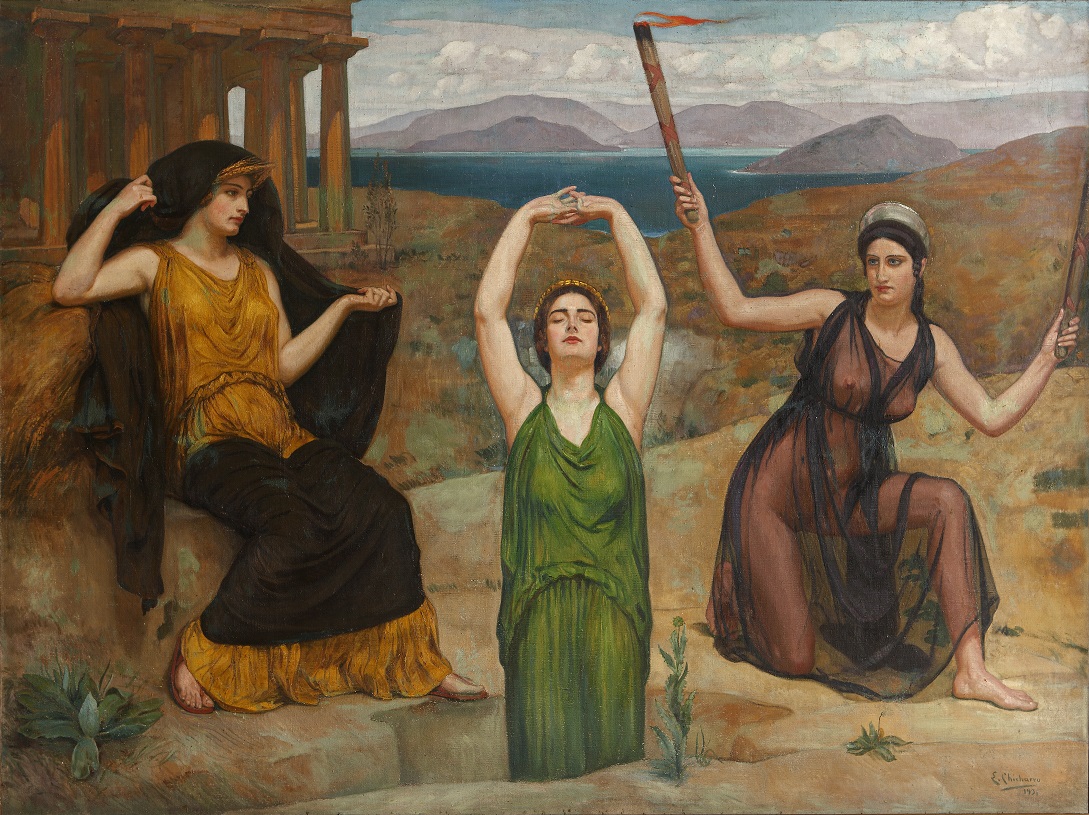
Painting by the Spanish artist Eduardo Chicharro y Agüera (1931)
He also explains that the myth of Kore is connected to the custom of burying a corn-doll in winter and digging it up at the beginning of spring, when it was already sprouting. According to Ovid, the flowers Kore was gathering at the moment of her abduction were poppies — with their obvious soporific properties and their scarlet colour of resurrection — which can be read as a foretelling of her winter retreat.
Now, this myth has strong connections with others. Robert Graves himself notes the parallels between Persephone and the Sumerian goddess Inanna and her later Babylonian incarnation Ishtar.
The descent of Inanna / Ishtar into the underworld
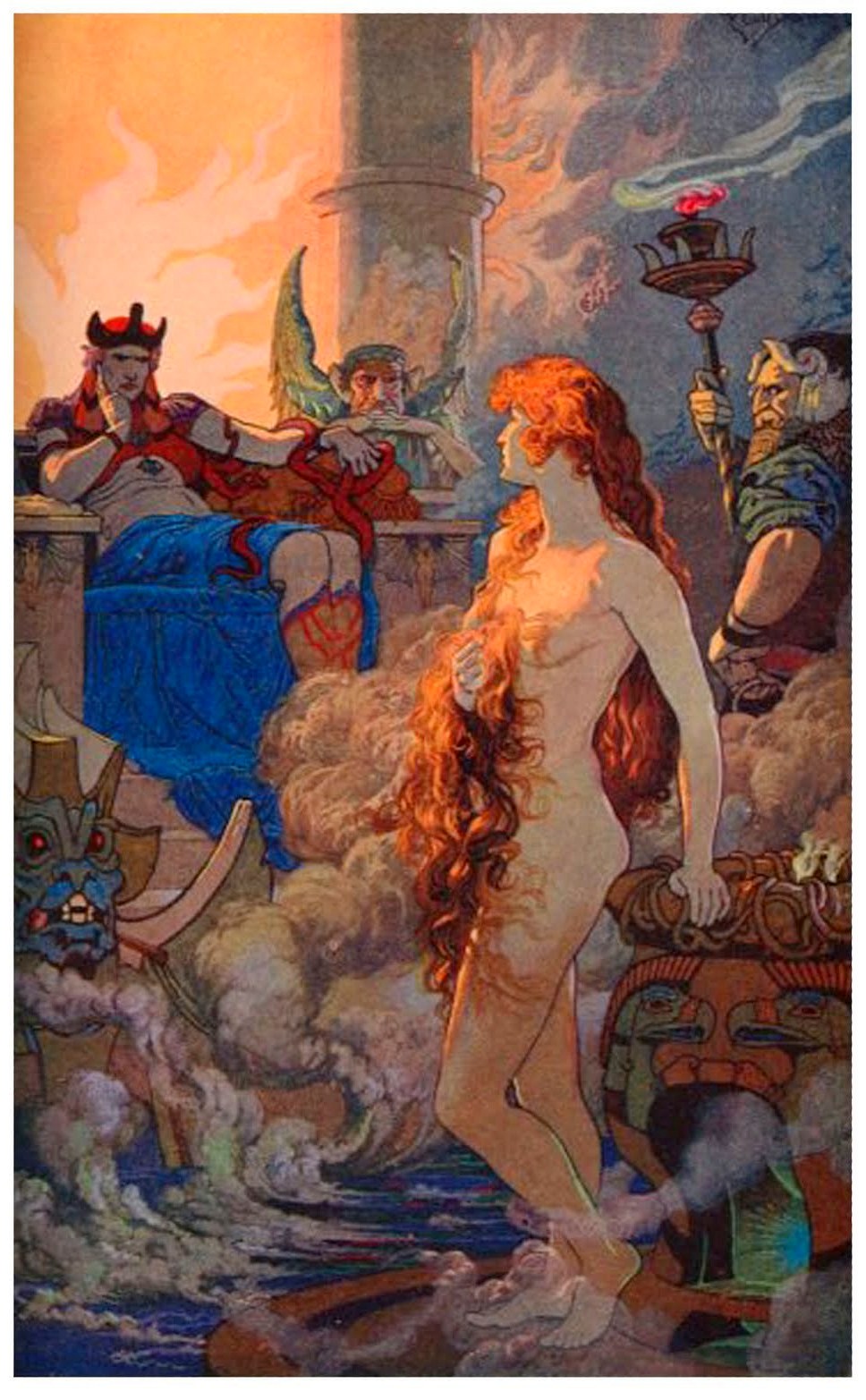
Inanna/Ishtar is not considered a mother goddess, but neither was Persephone; they represent fertility itself, the spark of life, the instinct of preservation, deeply bound up with sexuality and reproduction. Like Persephone, Inanna/Ishtar descended into the underworld. In some versions of the myth she goes in search of her dead husband Tammuz, the demigod of vegetation; in others the purpose remains unclear. The queen of the underworld is her sister Ereshkigal, who demands that Inanna/Ishtar surrender one emblem of rank at each of the seven gates that lead down to her. At the first gate she gave up her sandals, symbol of her will; at the second she had to leave her jewels, symbol of her ego; at the third she surrendered her clothing, and with it her mind; at the fourth she offered the golden bowls covering her breasts, renouncing her sexuality; at the fifth gate she left her necklace, the symbol of illumination; at the sixth gate, her earrings, and with them her magic; finally, at the seventh gate, Ishtar removed her crown of a thousand petals, which symbolized divinity. Once naked and humbled, Ereshkigal holds her in her domain, while on earth people and all other creatures cease to reproduce. Through the intervention of other gods, Inanna/Ishtar is returned with all her attributes restored.
Her sojourn in the underworld and the stripping of her royal insignia correspond to winter, when the earth is stripped of every sign of fertility.
The inhabitants of winter
The importance of this time of year merited, in many cases, its own deity or more than one. Let us look at a few and try to identify common traits.
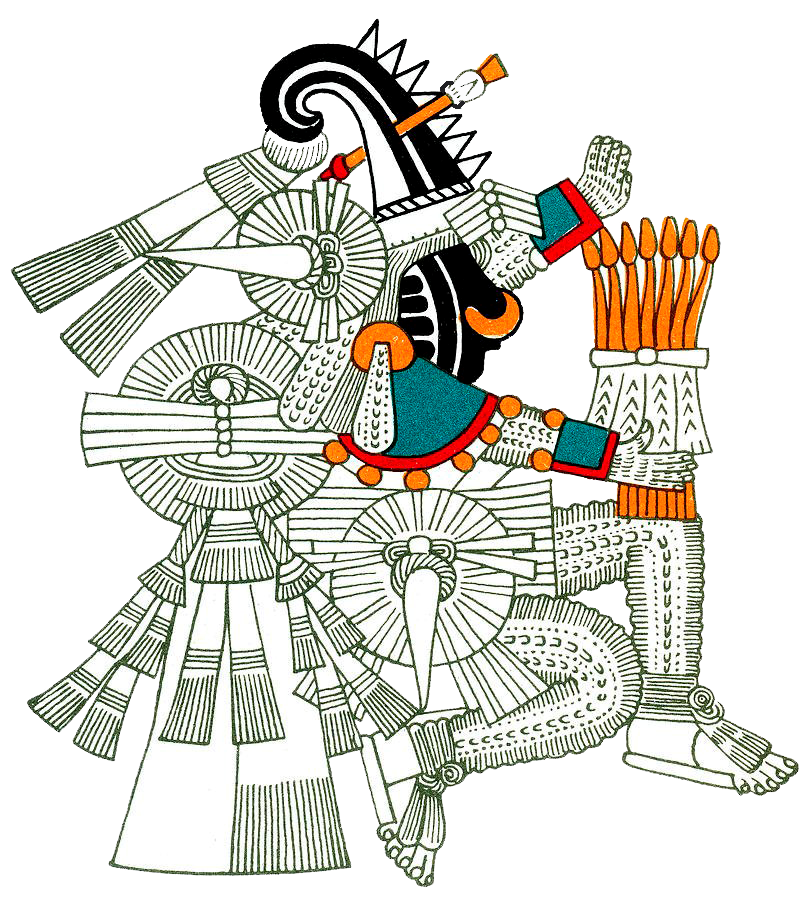
Tlahuizcalpantecuhtli / Itztlacoliuhqui
According to Mexica or Aztec legend, Tlahuizcalpantecuhtli was a cheerful and happy god, the personification of Venus, the morning star. However, when Tonatiuh, the Sun, demanded obedience and sacrifices from the other gods, Tlahuizcalpantecuhtli refused in anger and shot an arrow at him that missed its mark. Tonatiuh returned the shot, and the arrow pierced Tlahuizcalpantecuhtli through the head, transforming him into another god: the god of ice, cold, winter, sin, punishment, natural catastrophes and human misery. He was now called Itztlacoliuhqui, and his entire head was said to be made of obsidian. As the god who punished men and demons in the underworld, he carried the instruments of justice: the stone and the club.
Boreas and his daughters
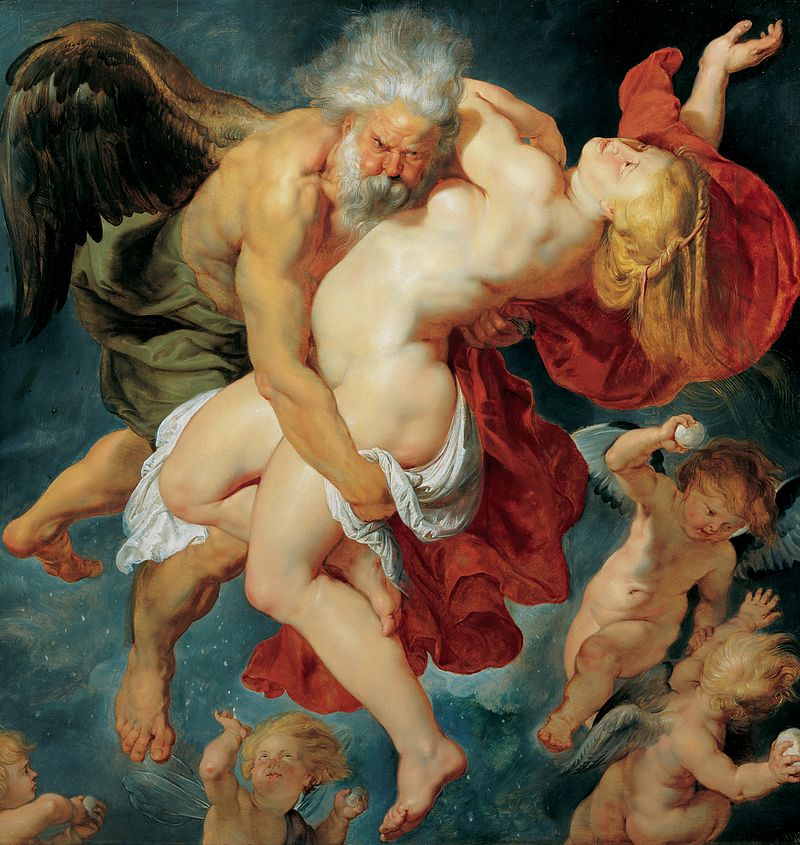
In Greece, winter was brought by Boreas, the North Wind, son of Titans. Boreas was strong and violent in temperament. He is often depicted as a winged old man with wild beard and hair, carrying a conch shell and wearing a robe of clouds. Boreas was the fertile wind that made mares conceive when they turned their hindquarters toward him. On one occasion he courted Oreithyia, an Athenian princess, but when sweet words proved ineffective, he turned himself into a powerful gust of wind, swept her away from the riverbank where she was dancing, and carried her off to Thrace. With her he had two sons, the winged Zetes and Calais, and two daughters, Chione and Cleopatra. Chione is the little-known goddess of snow, as her name suggests.
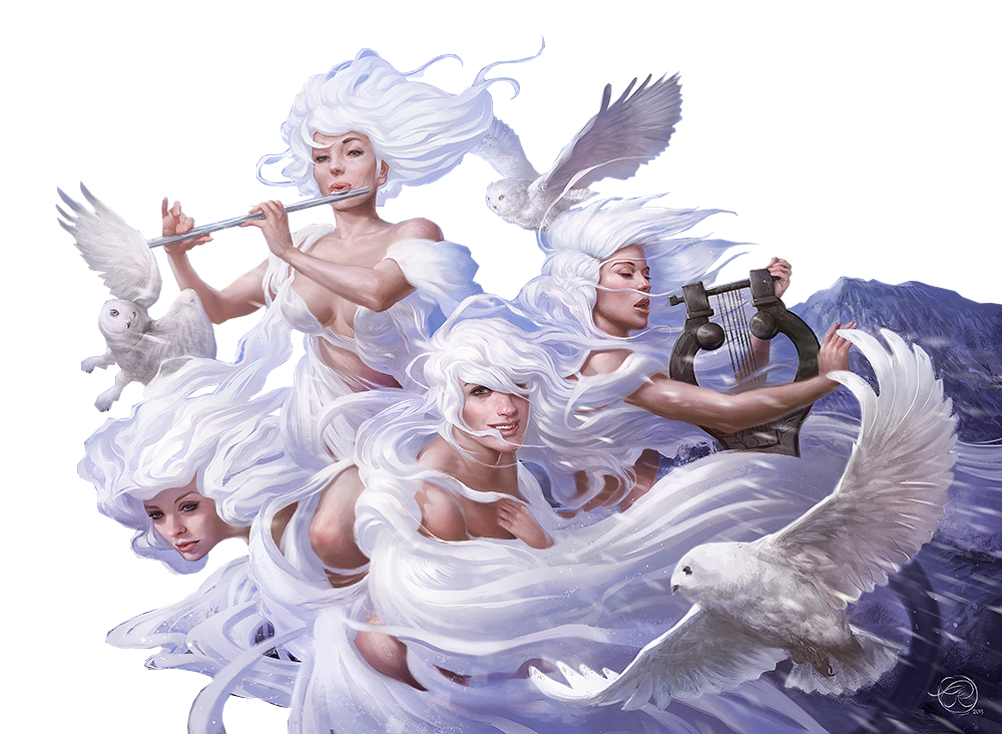
Illustration by Ryan Alexander Lee
The Cailleach Bhéara
Without doubt one of the most captivating figures of Samhain is the Cailleach Bhéara, whose Irish name might be translated as "hostile veil or mantle." In Scotland she is called Beira, Queen of Winter, and it is believed she shaped the landscape by dropping rocks from a basket. Others say she uses a hammer to mould valleys and mountains. According to the Scottish folklorist Donald Alexander Mackenzie:
"Old Beira was terrible to behold. She had but one eye, yet her gaze was sharp and piercing as ice and keen as a fish in the water. Her skin was of a dark and livid blue…
"Her teeth were red as rust, and her hair, which lay heavily upon her shoulders, was white as an aspen tree covered in frost. On her head she wore a mottled mutch (an old woman's cap). All her garments were grey, and she was never seen without her great brown shawl drawn tight about her shoulders."
Katharine Briggs, in her wonderful book A Dictionary of Fairies, writes that:
"According to most of the legends, Cailleach Bheur seems to be the spirit of winter. She has a wand with which she touches the trees at the end of autumn and the leaves wither. She wanders during the winter over the hills with a herd of wild deer that are her cattle. Wild goats, boars and wolves were also in her keeping;… When spring comes, she throws her wand under a holly tree and becomes a motionless stone, until she comes back to life again at Halloween."
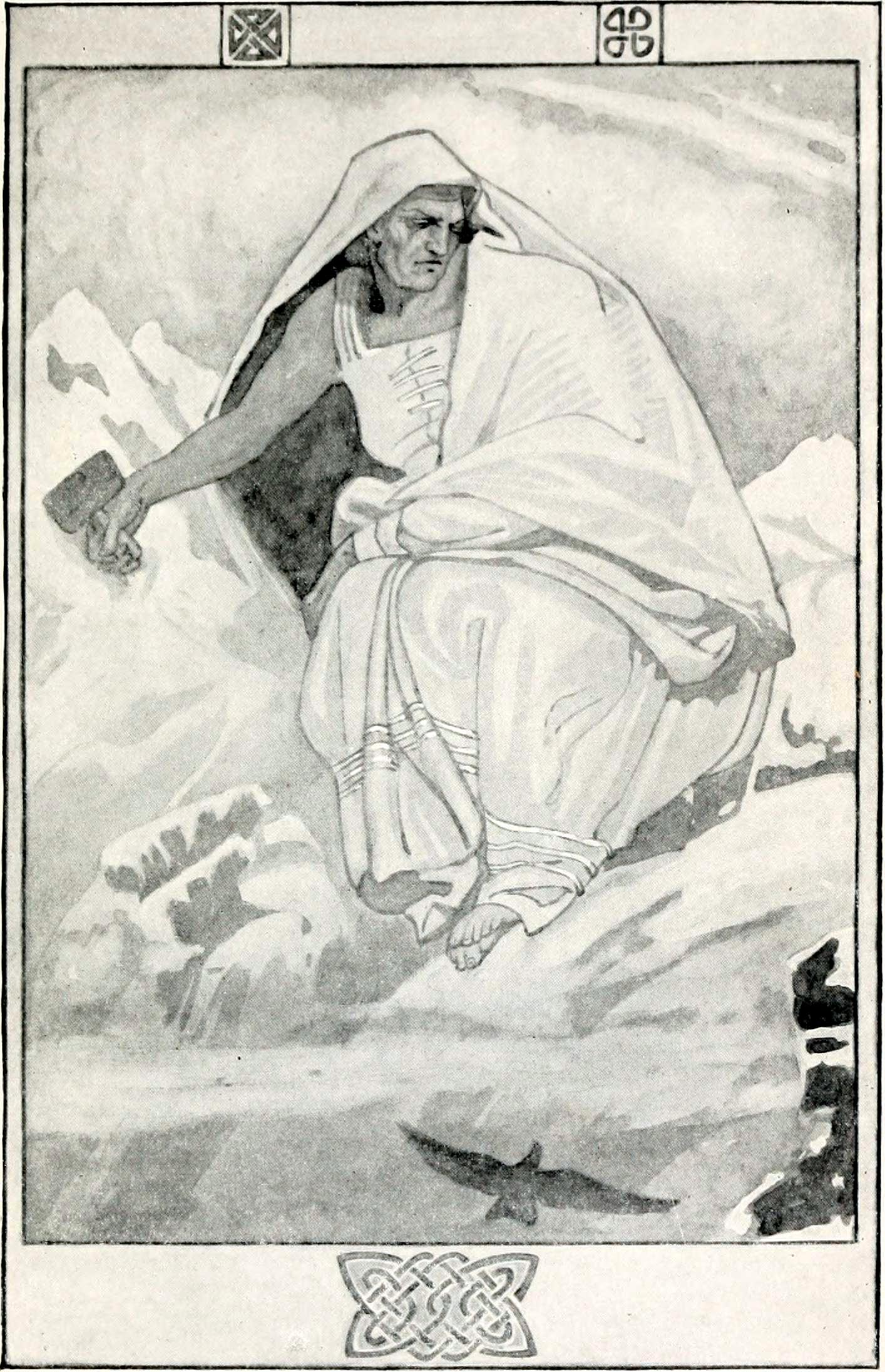
She is undoubtedly the queen who reigns during the winter months, between Samhain and Beltane, opposed in this way to Bride or Brigit, who presides over the summer months. Some even believe she is the same goddess who grows old and young in cycles, like the two faces of a coin. Whether she turns to stone or drinks from the Waters of the Well of Youth in the mythical fairy realm, the Cailleach is ready on the first day of winter to assume her role. In Scotland she is imagined washing her féileadh mòr (great kilt) in the Gulf of Corryvreckan three days before Samhain. When she is done, the cloth is pure white and snow covers the land. Indeed, beyond shaping the landscape, the Cailleach also shapes the weather. Particularly famous are her spring storms, when she tries to stretch winter a little longer.
Frazer recorded that in Scotland there was a custom of making a figure from the last sheaves of the harvest, which probably represented the Cailleach.
"At the reaping, there was a contest to avoid being the last to finish, and where common tillage was practised there are instances of a rig being left unreaped between the ridges (no one would claim it) because that would have left the reaper last. What was feared was having to feed until the next harvest the 'famine of the farm-town' (gort a bhaile) in the shape of an imaginary old woman (Cailleach). Much rivalry and mockery sprang from the fear of this old woman… The first to finish made a doll out of some corn-stalks, which was called the 'old wife,' and sent it to his nearest neighbour. That person passed it on to the next, even more hastily, and so on until the last person was left holding the 'old woman' for the whole year."
The Norse gods of winter
As we move further north, the number of gods connected with winter or with some aspect of it increases. In Norse and Germanic mythology the list is long. Odin, chief of the pantheon, god of war and wisdom, leads the Wild Hunt during the winter solstice — a kind of ghostly host that tears across the night sky with tremendous noise.
Rindr, one of Odin's lovers, with whom he fathered Váli, is, like Jörð and Frigg, an allegory of the Earth. According to Niedner Heinrich: "Jörð is the primordial, uninhabited earth, or the earth without relation to man; Frigg is the inhabited, cultivated earth, the dwelling-place of man; and Rindr is the earth once again uncultivated, when the white flakes of winter cover its surface; in this last state she long resists the caresses of her husband… Jörð is the Gaia of the Greeks, Frigg is Demeter, but the fortunate Greeks have no goddess corresponding to Rindr; they do not know the harsh winters of the North."
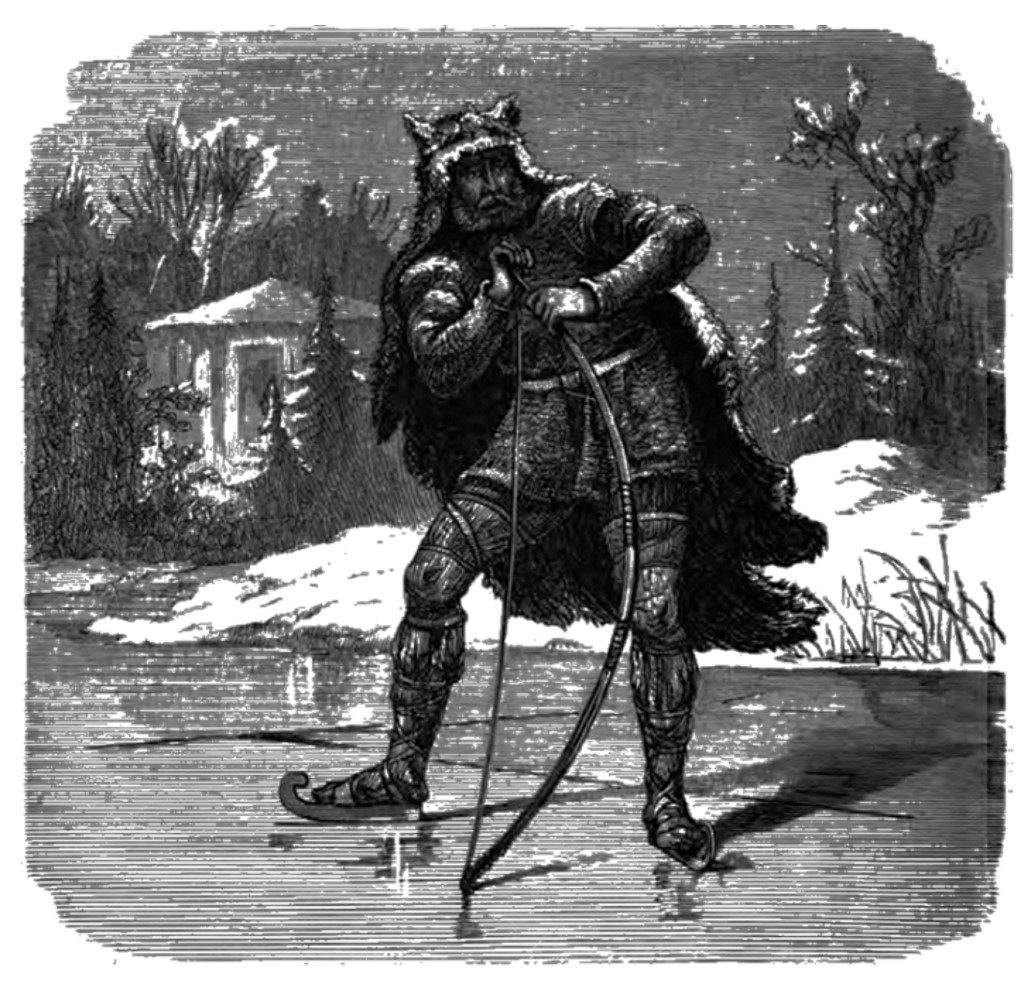
By W. Heine
The god officially regarded as the god of winter, however, is Ullr, son of Sif and stepson of Thor. Nothing is said of his biological father. Information about Ullr in historical documents is extremely sparse, but it is known that he is especially skilled at skiing and archery. He is a very handsome man and a capable warrior, and was commonly invoked before combat. He is said to have ended up married to the giantess Skaði, after her marriage to Njörðr fell apart. There is no official source to confirm this union, but it is not altogether implausible, since Skaði, despite being a giantess, is counted among the ásynjur as a winter goddess, and is likewise fond of archery and skiing.
The gods slew Þjazi, Skaði's father, and to compensate her they offered to marry her to one of them. The condition was that Skaði had to choose her husband by looking only at their feet, and she chose the cleanest ones, believing them to belong to Baldr. They turned out to be the feet of Njörðr, which were constantly washed by the waves, and the two were wed; but the relationship did not last, for Skaði wished to live in the mountains, skiing and hunting game, while Njörðr preferred to remain by the sea.
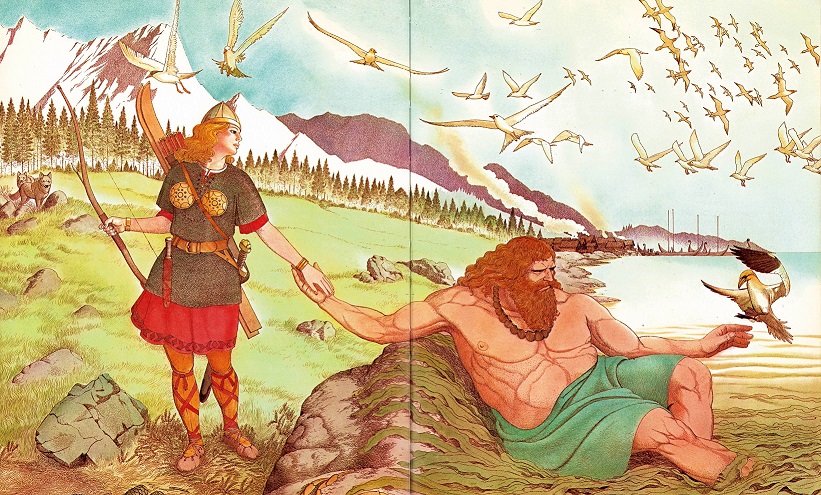
Also in Scandinavia, the beings known as jǫtnar ("devourers" or "man-eaters") or hrímþursar ("frost giants" or "rime giants") were regarded as the forces of chaos, portrayed as clumsy and dim-witted — the brute force of nature. These giants will take part in the destruction of the world at Ragnarök, which will be preceded by a long succession of winters called Fimbulwinter.
YOU MIGHT ALSO LIKE TO READ:
Louhi, the matriarch of Pohjola
Curiously, the further north we travel into Finland and Lapland, the harder it becomes to find winter deities. There the cold is almost perennial and, though the people have adapted well to it, it brings little good. In Finnish mythology, Pohjola, meaning "the North," is a dark and frozen land, the source of all evil; from there come diseases and killing frosts. It is inhabited by Louhi, a witch capable of transforming herself into anything and of stealing the Moon and the Sun, plunging the whole country into a wave of cold.
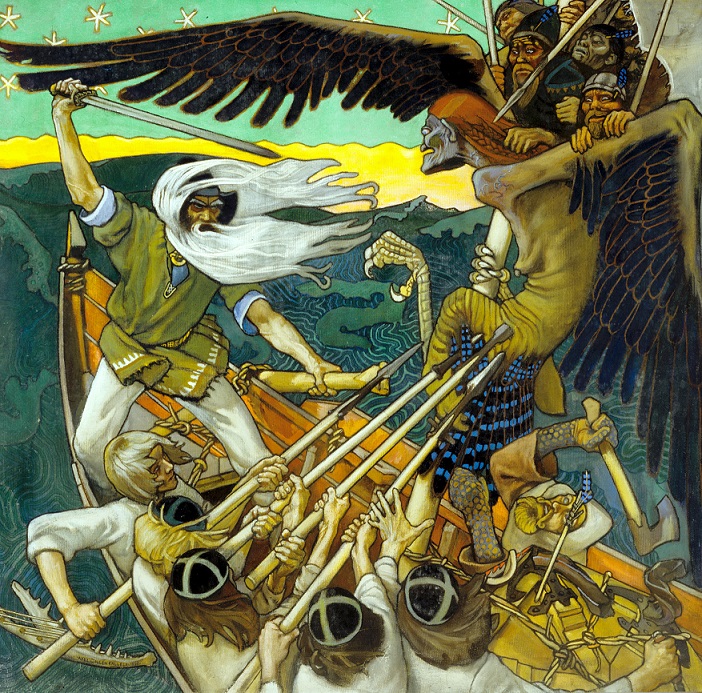
Painting by Akseli Gallen-Kallela, 1896
YOU MIGHT ALSO LIKE TO READ:
Ded Moroz and Snegurochka
In many other places where pre-Christian beliefs did not survive the absence of a written tradition and the imposition of Christianity, many gods and goddesses ended up becoming mere characters in children's tales, objects of superstition and festivities stripped of any pagan religious meaning. Ded Moroz, Grandfather Winter, is a long-bearded old man resembling Father Christmas, who today plays the central role in Russian Christmas. Like his western counterpart, Ded Moroz has the mission of bringing the family together on Christmas Eve and delivering gifts to children.
Some make him the son of Veles, a chthonic god associated with the earth, water and cattle, and Morana, a terrifying goddess linked with night, winter and witchcraft, closely resembling Hecate and the Cailleach. Although there is no certainty, it is not unreasonable to suppose that Ded Moroz may be a remnant of an ancient deity or demon that personified winter. The celebrated writer Alexander Afanasyev compiled and published a story called "Morozko" between 1852 and 1862, about two stepsisters — one good and one good-for-nothing — each of whom gets her just deserts from the old grandfather.
Over the course of the nineteenth and twentieth centuries, his originally more frightening image as a child-snatcher was shaped by the influence of the Orthodox Church, its use in children's literature, and even political pressure. After the Russian Revolution of 1917, all Christmas traditions were vigorously discouraged as bourgeois and religious activities, which gave the American Santa Claus an opening to infiltrate Russian culture. It was to counter this that the figure of Ded Moroz was revived, with a set of compulsory features that distinguished him from his western counterpart: on Stalin's own instructions, Grandfather Winter's coat was to be blue, not red. It was during the Soviet period, however, that the character acquired his current appearance: long white beard, fur coat and hat, valenki boots, the Posokh or magic staff with which he strikes the ground and brings hard frosts, and the troika drawn by three white horses. During the communist period, many countries moved their Christmas Eve customs to New Year's Eve and either replaced their own version of Saint Nicholas or created a new figure in the likeness of Ded Moroz, in order to forge cultural ties with the Soviet Union. In Romania, after 1948, Moș Gerilă — a young, athletic, proletarian man with a bare chest — replaced the Christian Moș Crăciun for three years.
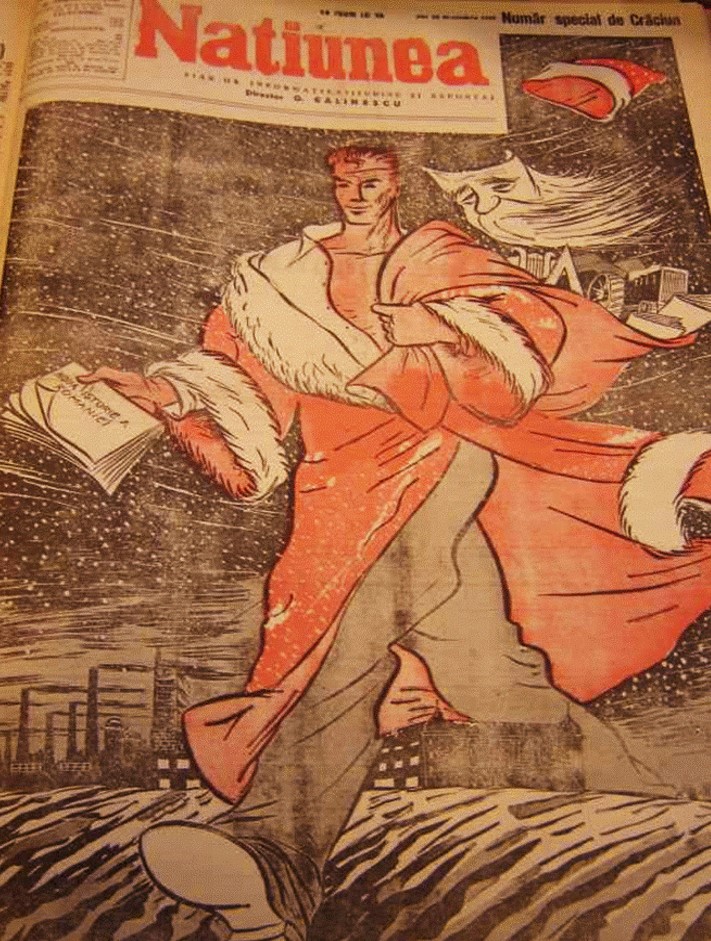
Despite everything, Ded Moroz has never managed to become entirely good-natured: his voice is deep and grave, and he is not quick to laugh, so children often hide when he appears. To soften the grandfather's character, his granddaughter Snegurochka, the Snow Maiden, is at his side — affectionate and kind, she helps him with his duties. In the Afanasyev tale of the nineteenth century she is a snow girl made by a childless elderly couple; she comes to life and stays with them until Midsummer Day, when, following the tradition, she imitates the other children and jumps over the bonfire. Inspired by Afanasyev, the playwright Alexander Ostrovsky wrote The Snow Maiden in 1873, a play that was not successful until Nikolai Rimsky-Korsakov turned it into an opera in the following decade. Here Snegurochka is no longer a child but a marriageable young woman, daughter of Spring and Frost, who longs for contact with human beings but whose heart melts when she falls in love. Many people mistakenly believe the story to be much older, but it is not; even so, this is the image of her that has come down to us — a beautiful young blonde woman dressed in blue or silvery white, wearing a fur hat or a crown of snow.
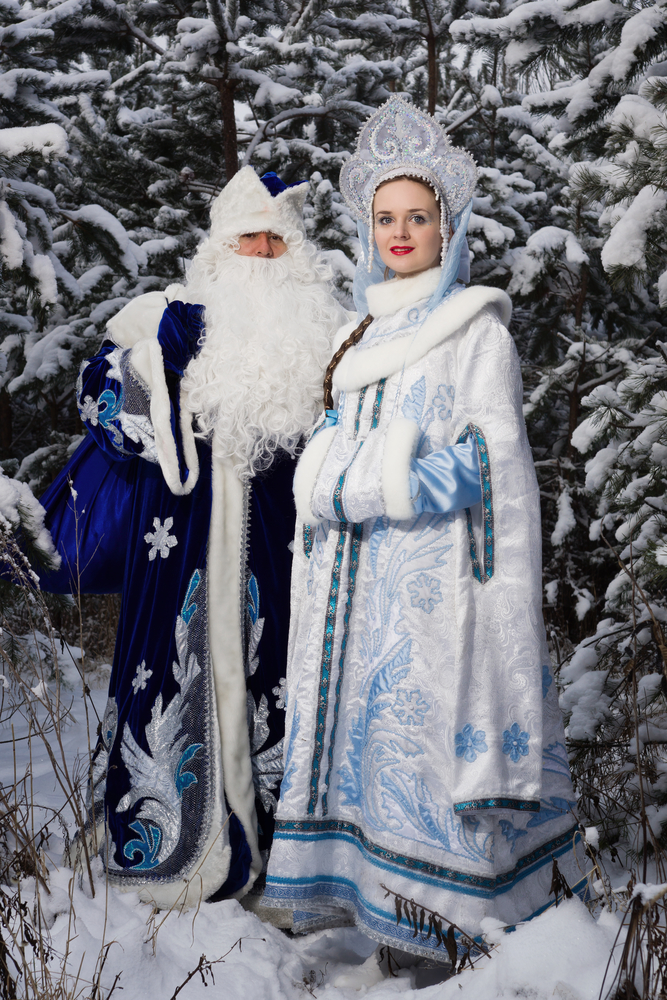
Ded Moroz is one of a long line of figures headed, in the West, by Santa Claus — who is nothing more than the memory of Saint Nicholas of Bari (who lived in Turkey in the third and fourth centuries) distorted by Washington Irving's writings of 1809, in which he called him Santa Claus to mock the Sinterklaas (the Feast of Saint Nicholas) of Dutch immigrants. The rest was accomplished by other artists and writers, some in the service of Coca-Cola, and the result is an incredibly powerful modern myth.
Hulda and Perchta
In Germany, the Brothers Grimm immortalized Frau Holle, Hulda, or Mother Snow in their books of children's fairy tales. Once again the two sisters appear, now in the service of an old woman who asks them to shake her feather quilt and pillows very thoroughly, for doing so will make it snow in the world. One sister is hardworking and the other lazy, and each gets what she deserves. But beyond the moral for children lies the essence of an ancient Germanic goddess dressed in white.
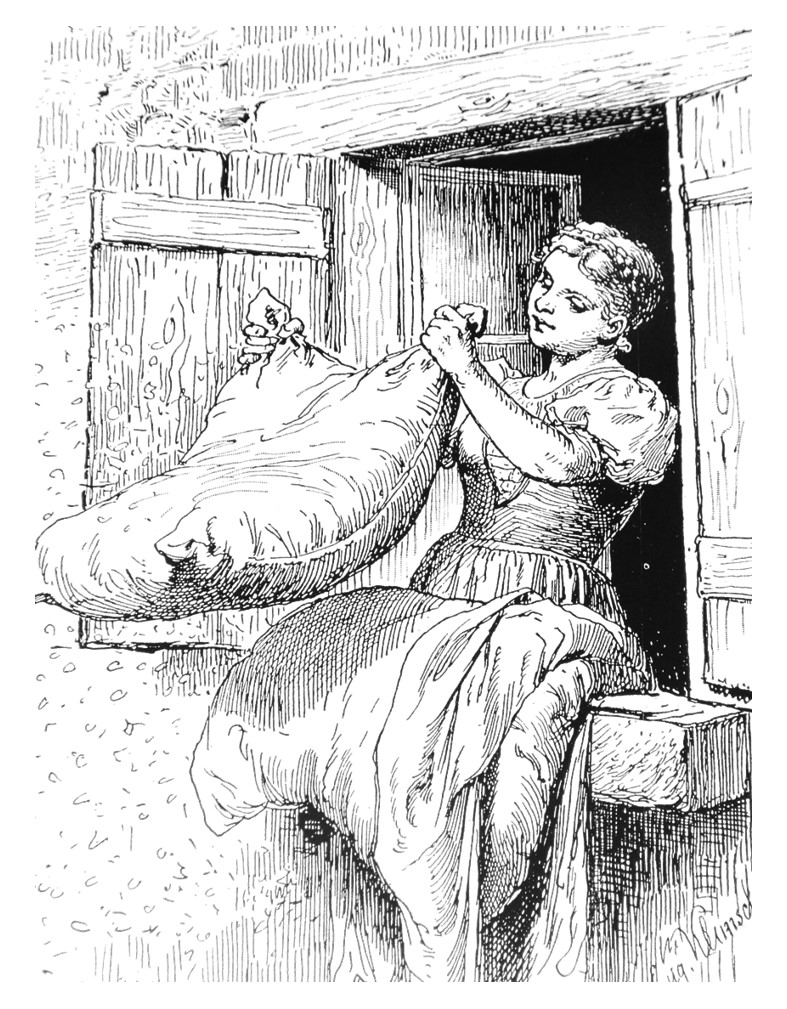
Through his anthropological work, Jacob Grimm sought to restore her divine status as protectress of agriculture, crafts and women. Hulda is associated with the art of spinning, which after the establishment of Christianity was considered the business of witches. During the Middle Ages she was regarded as the leader of a group of women whose spirits flew out on their distaffs to travel vast distances through the sky, hold great revels and do battle among the clouds — a kind of feminine Wild Hunt. In the tenth-century Canon Episcopi one can read:
"Have you believed that there is some woman who through the tricks the devil has played on her believes and professes that she rides with a horde of demons in the shape of women [in some manuscripts called Holda the witch] on certain nights? If you have taken part in this foolishness you must do penance for one year on the appointed fasting days."
She has been called Diana and linked to Perchta, a figure who has become an Alpine demon, and many other comparisons could be drawn with ancient weaving goddesses, sorceresses and prophetesses. For many researchers, the fact that she is capable of making it snow is a sign that she must once have been a very powerful being. Saying "Hulda is making her bed" when it is snowing is still a common expression in Hesse and other parts of Germany.
According to Grimm, Perchta was known "precisely in the regions of Upper Germany where Hulda ends — in Swabia, Alsace, Switzerland, Bavaria and Austria." She has the same functions as Hulda as protectress of beasts and of spinning, and may appear beautiful and white as snow, or old and haggard. In many early descriptions she had one large foot, sometimes called a goose foot or swan foot. Grimm thought this symbolized her status as a superior being capable of taking animal form, or that it referred to her work as a spinner, working the treadle of the spinning wheel. Spinning was forbidden on feast days.
In the folklore of Bavaria and Austria, Perchta was said to wander the countryside at midwinter and to enter homes during the twelve days between Christmas and Epiphany (especially on Twelfth Night). She would know whether the children and young servants of the household had behaved well and worked hard throughout the year. If they had, they would find a small silver coin the following day, in a shoe or a bucket. If not, she would slit open their bellies, remove their entrails, and stuff the cavity with straw and pebbles. She was above all concerned that the girls had spun their allotted portion of flax or wool during the year, which is no doubt connected to the importance of having new garments and warm clothing for the cold winter.
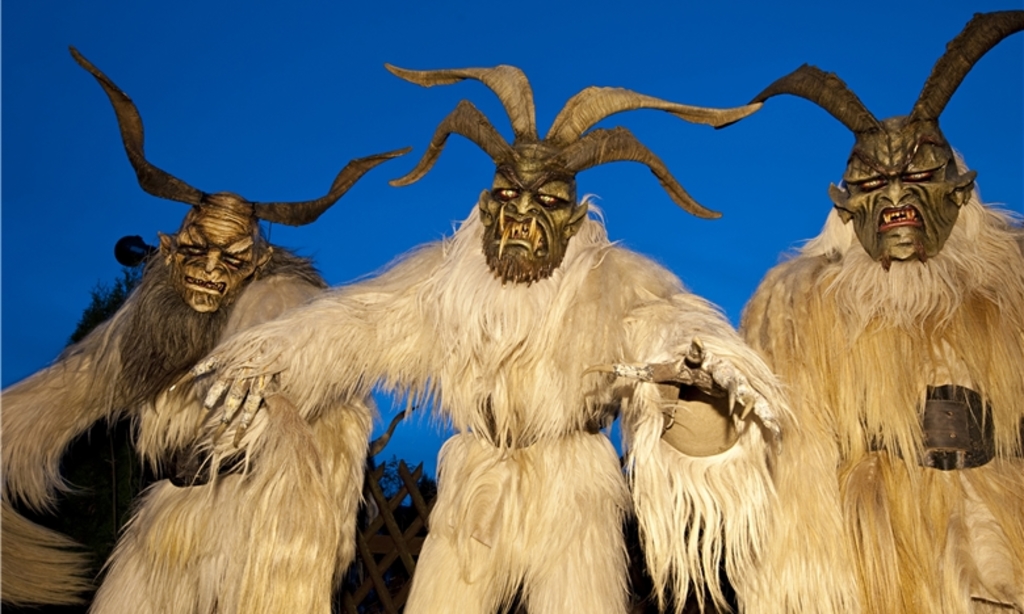
Today the Perchten are carnival masks used in the mountain regions of Austria. Some are beautiful and radiant, known as Schönperchten or "beautiful Perchten," and bring luck and wealth. The other form is the Schiachperchten or "ugly Perchten," which has fangs and a horse's tail to frighten away demons and ghosts. In Italy, Perchta's equivalent is La Befana, who visits children on the night before 6 January to fill their stockings with sweets if they have been good, or a lump of coal if they have been bad.
Jack Frost
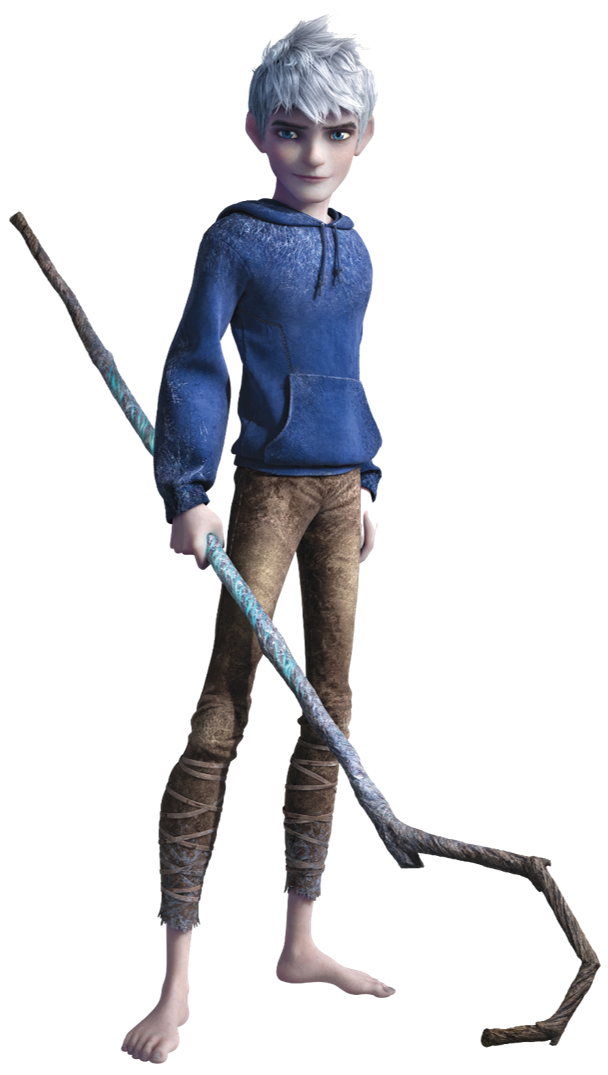
Jack Frost is a kind of synthesis of all the figures named above. Created by literature and superstition for children, he has no mythological past, despite being made out to be the son of Kari, a giant in Norse mythology and personification of the wind. Many internet sources seek his antecedents in Morozko, in Frau Holle and in Anglo-Saxon and Norse traditions, but the truth is that he is a poetic and modern representation of frost, ice, snow, sleet, winter and cold. He is generally described as an adult figure, benevolent and mischievous, responsible for the icy patterns that appear on windowpanes and for the nip of cold on fingers, toes and nose, and so on. He is sometimes depicted with a paintbrush and a bucket, colouring the autumn foliage red, yellow, brown and orange.
Asian figures
Finally, if we look to Asia, we find divine figures such as the Great God of Winter of Taiwan, one of the Ba-Jia-Jiang — eight deities who serve as bodyguards and exorcists, protecting other gods, the dead and the living. At some point, the devotees of the temples where their images were kept, particularly certain military companies, began to dress as the eight generals and to take part in colourful and awe-inspiring public ceremonies. The representatives of the four seasons stand behind the four senior generals in the formation, and their role is to interrogate and torture prisoners. Each is represented by a mythological beast and a plant. The elaborate make-up of the Great God of Winter is inspired by the tiger and the chrysanthemum, and his mission is to intimidate and threaten; for this reason he carries a snake.
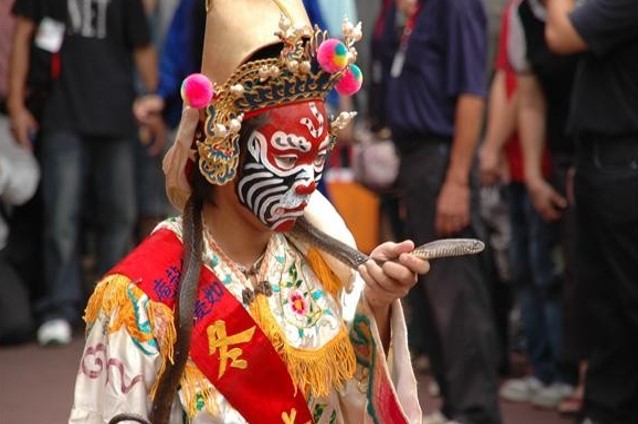
It is curious that it should be the tiger that identifies this god, given that the black tortoise is the creature traditionally associated with the north and with winter in Chinese culture.
In Japan we find Yuki-onna, a kind of snow ghost, possibly the spirit of someone who froze to death. Described as a very pale woman in a white kimono, she is generally harmful and dangerous: she lures men with her icy beauty or causes them to lose their way.

Conclusions
At this point we can conclude that, whatever winter may be, the Sun plays a fundamental role in its mythology; no one prays for winter to come, but rather for the Sun to return. The Sun, during winter, has died or gone away. Winter is a time to celebrate the birth of a new Sun and to purify the Earth. As for the inhabitants of winter, we may venture to say that:
- They are ambiguous and/or mischievous. They tend to be benign and malign at the same time.
- They are connected with the underworld and with death, but also with fertility and renewal.
- They are judges par excellence — those who reward and those who punish, the cruel wielders of the instruments of torture.
- They are gods of wind, night and magic.
- They know that their function is necessary, yet they do a good that no one thanks them for — perhaps on account of their terrible appearance.