Most Spanish Ásatrú-Odinists consider themselves the rightful heirs of the pre-Christian Norse religion, pointing to the presence of several Germanic tribes on the Iberian Peninsula between the 5th and 8th centuries (the Suebian kingdom of Gallaecia, 409–585, and the Visigothic kingdom of Toledo, 549–725). They attach little importance to — or outright reject — everything that happened before or after the Visigothic period, which, for its part, did enjoy remarkable stability and put down deep cultural roots.
Odinists maintain that the conversion of these Germanic tribes — first to Arianism and then to Christianity — was a political matter rather than a religious one, and that they therefore continued to practise Odinism on Spanish soil. This theory ignores or downplays the fact that the Visigoths had long been in contact with the dominant culture of the Western Roman Empire and that, indeed, many of their conflicts and disputes had a significant religious dimension concerning the true nature of Christ (Arianism vs. Christianity). It is hard to believe that such deep theological conviction was merely a façade. While it is obvious that the decisions of political leaders carried strategic weight, popular belief — far removed from any power game — had to be genuine. I would not go so far as to flatly deny that an Odinist cult existed in Spain during this period, but, as far as I know, there is no documentary or archaeological evidence to confirm it, and whatever evidence might exist has an equal chance of being Roman or Celtiberian in origin.
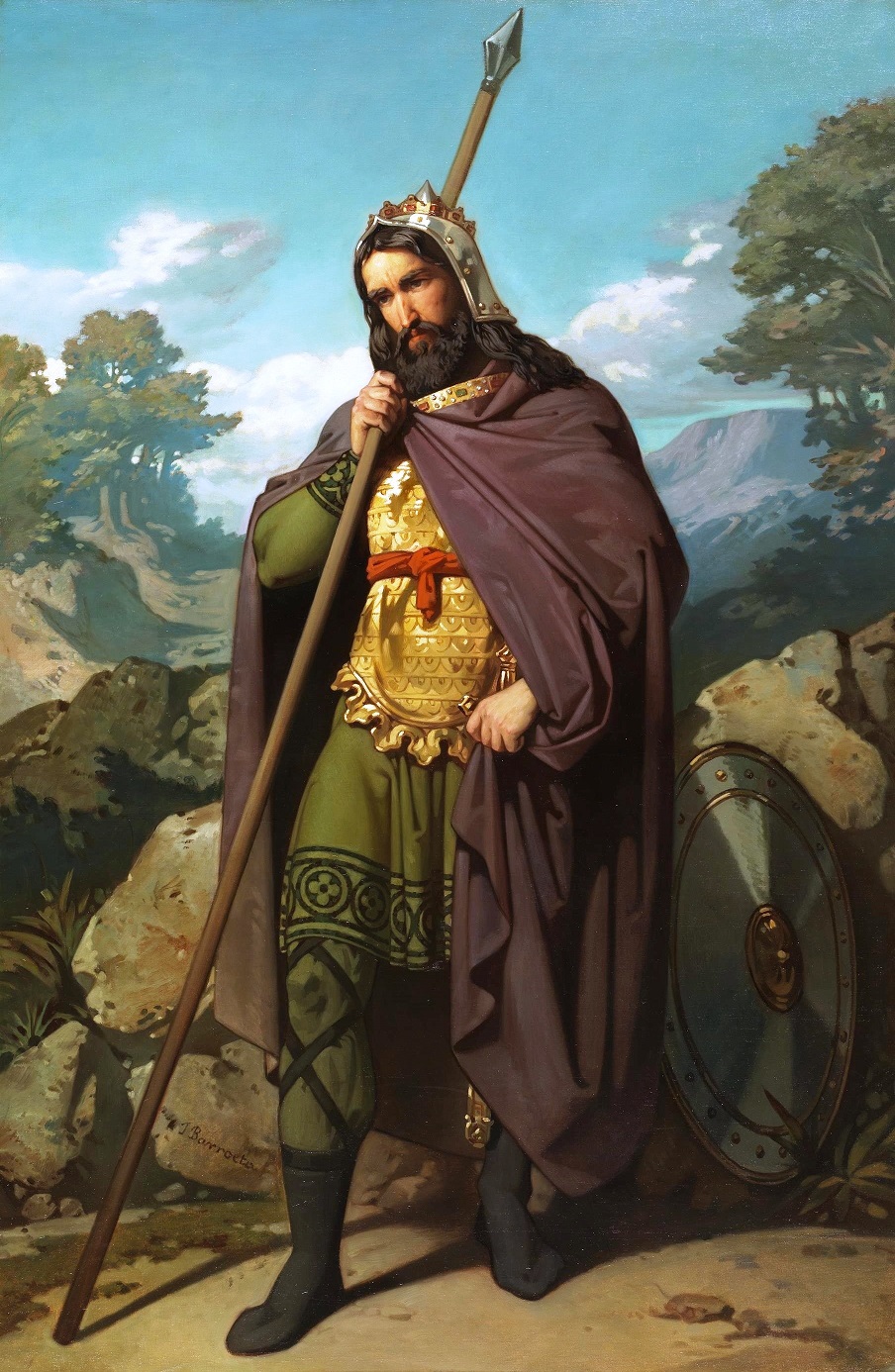
Painting by Juan de Barroeta (1854–55)
In any case, at least no one can deny that they were Germanic tribes. What I found more unsettling was stumbling upon the theory of the Canarian Vikings.
The origin of the Guanche people, the indigenous inhabitants of the Canary Islands, has always been a matter of controversy. Some of them have fine, straight features, a tall build, and are fair-haired with light eyes. In the 19th century this caught the attention of certain European researchers, who immediately put forward their theories: the French claimed that the Canarians were descended from the Celts, while the Germans insisted they belonged to the tribe of the Vandals. The purpose of these pseudoscientific assertions was to justify the colonial expansion of their respective countries. The German Franz von Löher, in his work The Germans in the Canary Islands (1886), stated explicitly that the German Empire had the right to occupy the islands and wrest them from the Spanish state. Already in the 20th century, before and after the Second World War, other Germans enthusiastically revived the 19th-century idea of the European Cro-Magnon — tall, blond and blue-eyed — who had passed through the Canaries and left his proto-Aryan genetic mark there. None of them carried out excavations or linguistic analyses; they contented themselves with measuring skulls and noses, which was what they enjoyed.
Today there is no doubt that a large proportion of Canarians inherited their physical traits from their North African relatives, the Berbers, who may in turn have absorbed European genes at various points in their history.
The Nordic features found in some Berbers are generally attributed to the Vandals, who in the 5th century established their kingdom in Africa with Carthage as its capital. Yet the earliest human settlements in the Canary Islands have been dated to the 4th century BC — long before the Vandals crossed the Strait of Gibraltar and mingled with the Berbers. Nor is there any European trace in the language or other features of the indigenous culture, which was materially rather undeveloped. This means that the famous fair-skinned Guanches could have a far more obscure origin. It should also be remembered that by the time they arrived in Africa, and throughout the duration of their kingdom, the Vandals had adopted Roman culture, including its religion, and little remained of their Germanic roots.
Increasingly sophisticated and effective genetic studies, conducted on ancient human remains and on living individuals, disprove the notion that the Guanches were "almost Vikings". As in the Maghreb, many Canarians still have pale skin — somewhat sallow, in truth — fair hair and light eyes, traits accentuated by modern mixed ancestry, but even so this is not the norm.
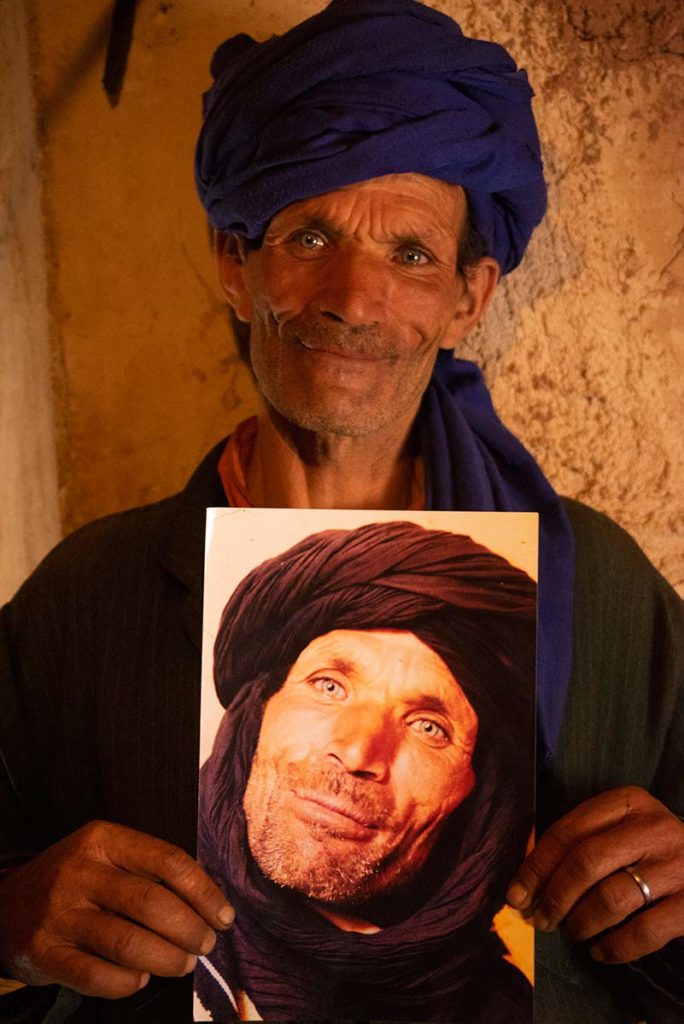
Earlier this year, 2023, the Twitter (now X) user @javilopen published an artificial-intelligence (AI) facial reconstruction of a Guanche mummy based on a photograph. The result was a square-jawed, blond, blue-eyed white face. The image caused controversy and was dismissed as "pure fantasy" by PAR – Arqueología y Patrimonio Virtual, a professional project dedicated to the 2D and 3D design and documentation of mummies and ancient sites. In fact, the face of the very same mummy had already been reconstructed previously using scientific methods.
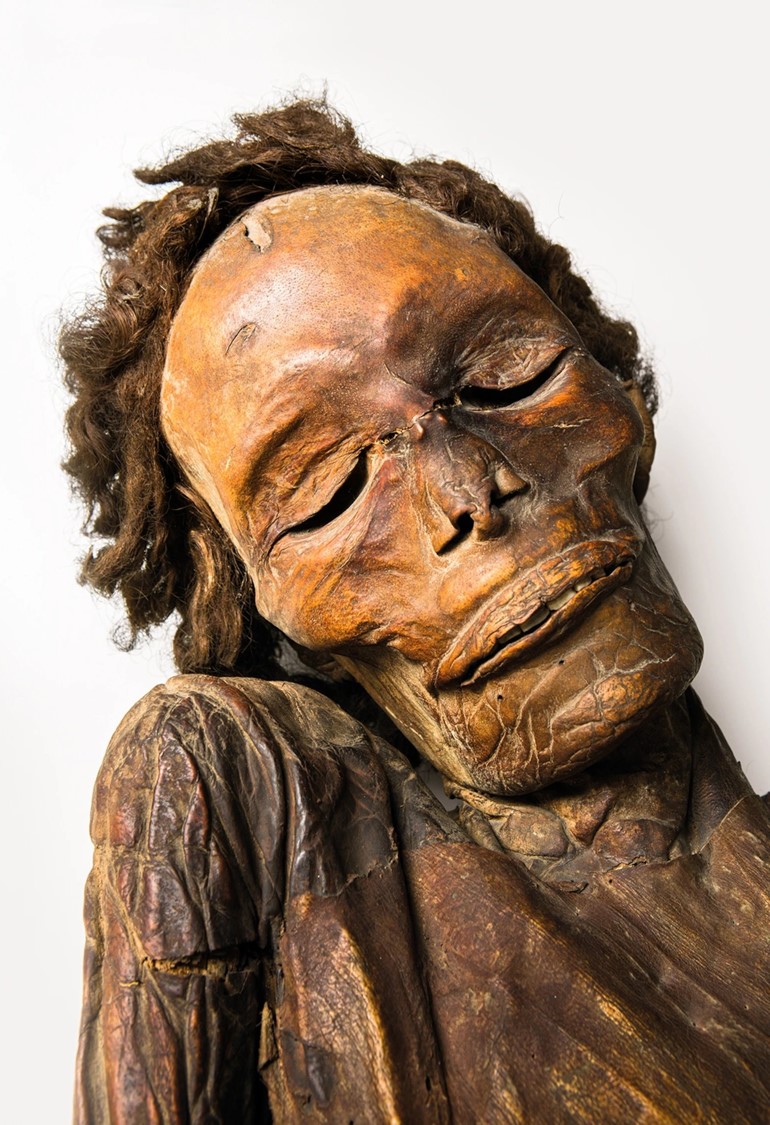
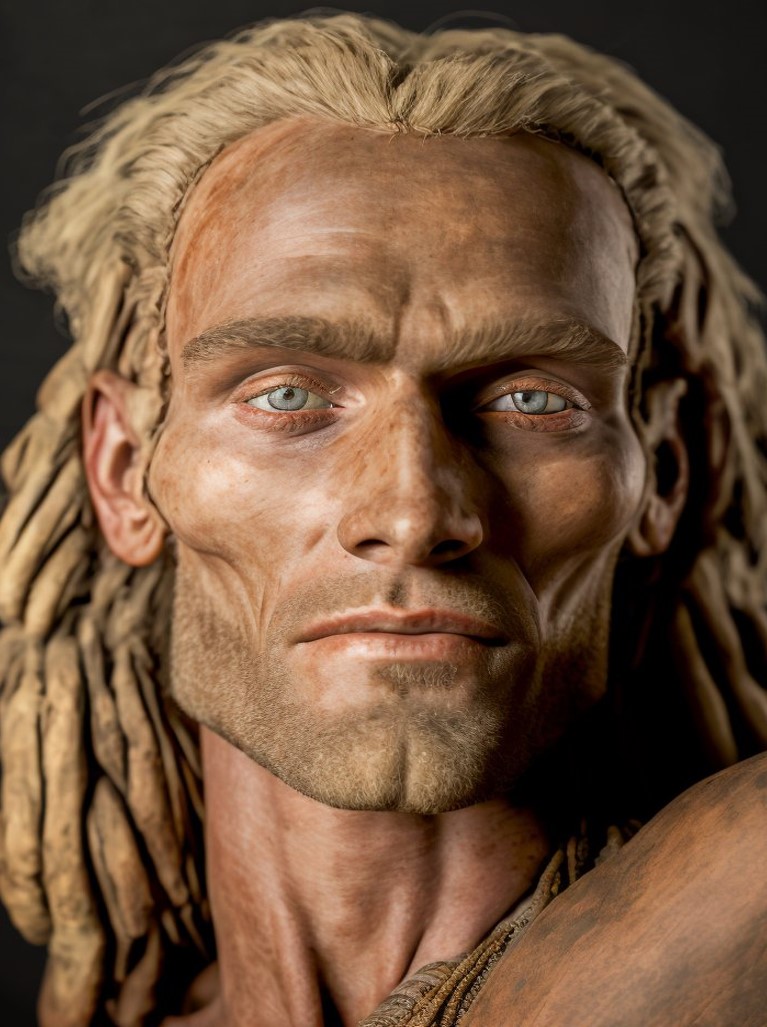
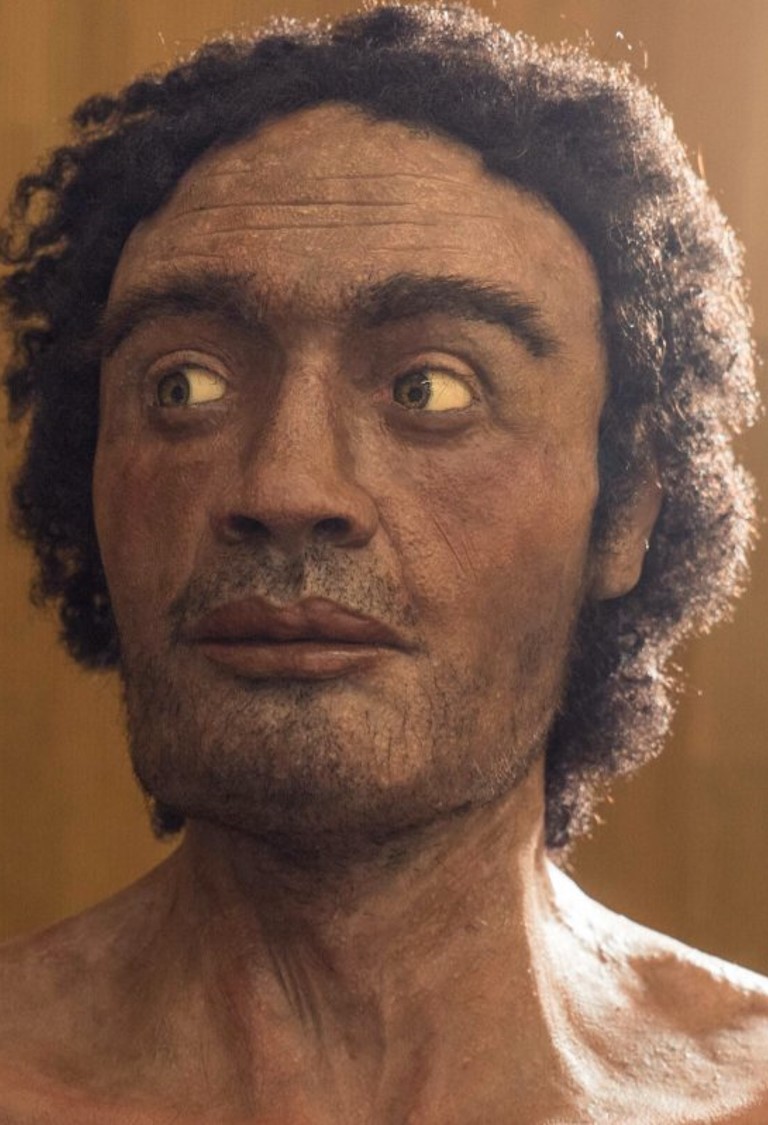
Other neopagans would like to believe that during their raids and voyages some Viking ship reached the Canarian archipelago and established, at the very least, a winter camp or operational base there. The Norse — tall and fair — fathered children with the plump, dark-skinned indigenous women, and some time later those neopagans themselves were born: the Vikings of the 21st century. Unfortunately, even this seems unlikely, for although it cannot be ruled out, there is as yet no evidence of Viking incursions on any of the eight islands. The Hispanist José Manuel García de la Torre wrote in 1969:
«It is possible that certain characteristics noted by some authors, linking the population to other human types or races — the Nordic race, for example — may have their real origin in accidental or forced landings by groups of seafarers, as could have been the case with the Vikings, though we are not particularly inclined to accept these hypotheses either, since, we repeat, there is no known instance of any such group, belonging as they would to more advanced Ages, having left us traditional testimonies.»
On the internet I came across a podcast featuring a character by the name of Juan Carlos Saavedra, an islander who admits to being interested in everything "mysterious and extraordinary". Juan Carlos claims that there exists a story about a Viking who arrives at an unknown island, and that a Swedish researcher has identified that island as one of the Canaries. I was unable to identify either the story or the researcher, because Juan Carlos cannot pronounce their names properly; moreover, he refers interchangeably to Iceland and Ireland, as if he were confusing the two. All in all, his explanation does not appear to make much sense.
Some time ago I found a website that also listed a series of finds and archaeological evidence for a Viking presence in the Canaries, specifically in Tenerife. It was one of those publications that appear serious at first and in the end reveal that the whole thing was a joke. Unfortunately I lost track of that site, but shortly afterwards I ran into a friend who described the same content to me in an effort to convince me that his grandfather was descended from Vikings.
And so yes, the phenomenon has made its way to Cuba. Our country received a great deal of Canarian immigration during the colonial centuries, and some of us — myself included — have ancestors from the islands. My friend told me that, on special occasions, his grandfather would slaughter pigs in the manner of a true Viking; that was when I understood that Cuba has more Vikings than Iceland. I am joking. In truth, I do not think you can pinpoint the anthropological origin of pig-slaughtering and family feasts. My friend's belief is almost certainly down to his own romanticisation of Nordic society and values.
On the other hand, it is hardly surprising that even today some Canarian great-grandmothers and great-grandfathers proudly claim descent from Celts or Vikings, for, as we saw earlier, members of their generation were exposed to certain campaigns of political and ideological manipulation, including the French and German theories. Besides, no Westerner takes offence when someone says: "you look Irish" or "you have a Nordic air about you".
My friend also assured me that the Canarian museums were full of Viking artefacts. In this he may not have been wrong. In 2018, riding the wave of success of the History Channel television series Vikings, the private foundation CajaCanarias, in collaboration with the National Museum of Denmark, hosted a major exhibition of Viking objects, both originals and reproductions. In fact, to capitalise on public interest in the controversial Viking presence in the archipelago, an entire tourist industry has grown up around the theme, including the very popular experience of sailing on a Viking ship.
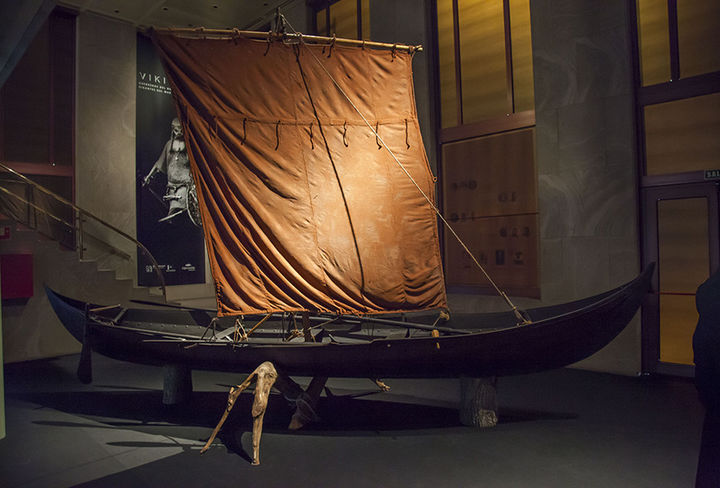
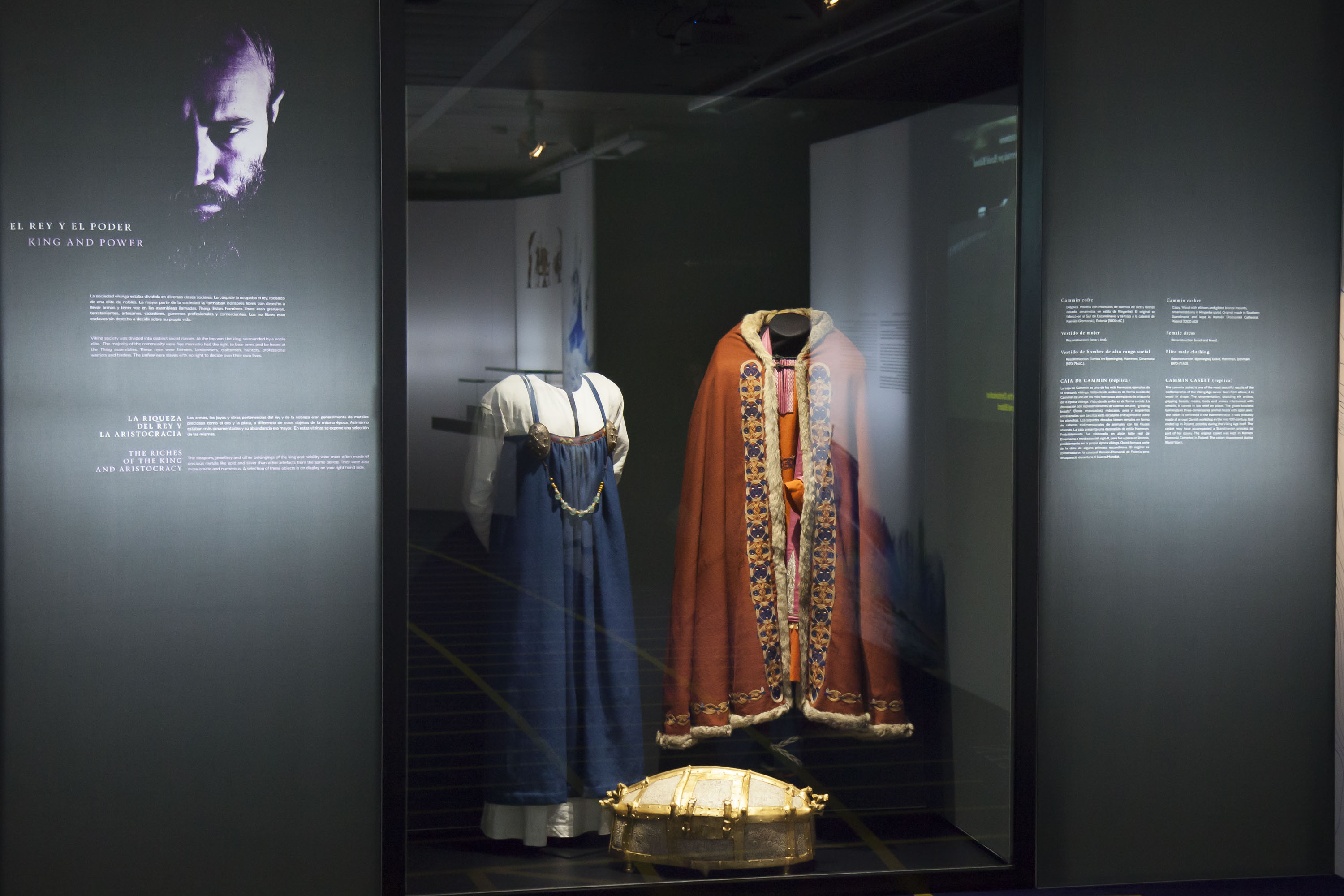
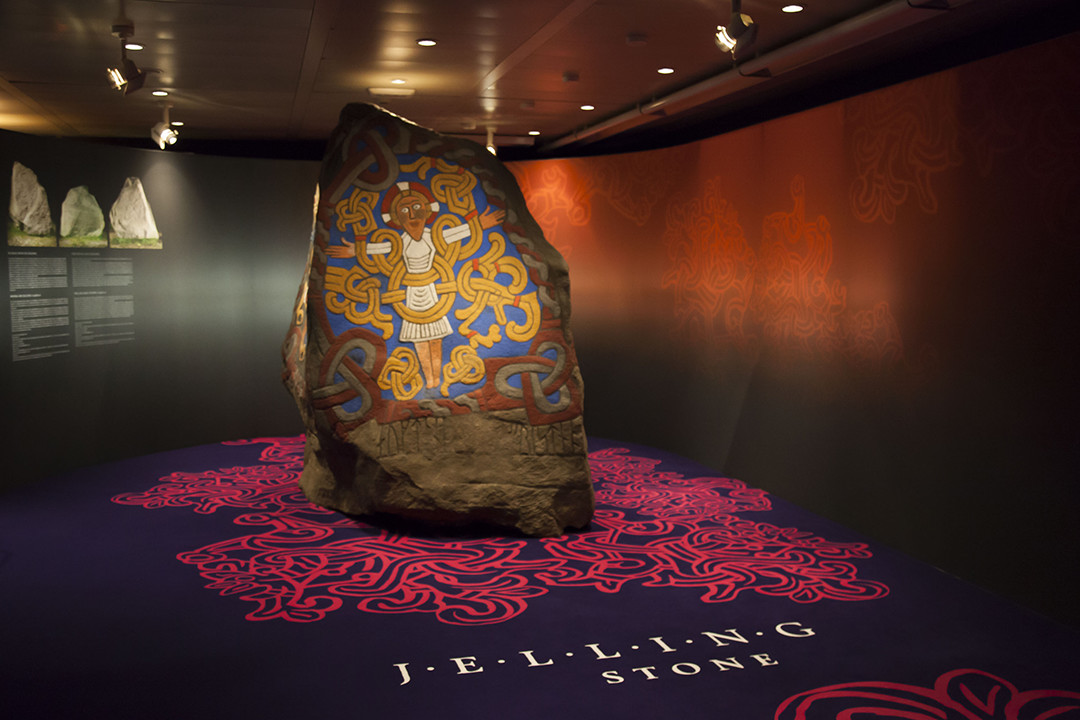
Human beings that we are, we invent whatever reasons we need to feel validated within a group or a trend. Sometimes we even pass those invented reasons on to our children. A very respectable person once told me that those who choose to go on living in the dimension of daydream should not be forced to take history lessons. And I agree. I only hope that, in this case, the dream does not get out of hand.