Published in The Sun on March 18, 2023
As AI (Artificial Intelligence) becomes more prominent in our daily lives, it won't be long before the worlds of religion and technology merge. The idea of robot gods and ChatGPT-generated sermons terrifies some people — and rightly so, according to certain experts.
Wesley Wildman, Professor of Philosophy, Theology and Ethics, and of Computing and Information Sciences at Boston University, told The Sun that he believes AI will soon be able to carry out religious duties — and do so even better than human priests.
"AIs will write better sermons than most preachers, conduct better Bible studies than most teachers, create incredible music and visual art for use in services, and deliver messages that more modest religious groups won't have to pay for."
ChatGPT has reportedly already made its way into churches, writing thoughtful and authentic sermons on behalf of priests — and congregants didn't notice. Wildman explained that AI will have the capacity to transform everything we know about our relationships with spiritual advisers and religious figureheads.
ChatGPT is a prototype artificial intelligence chatbot developed in 2022 by OpenAI that specialises in dialogue.
"It will be like having your own personal guru that you can take with you everywhere. You can trust it, seek advice from it, and learn to rely on it to help you navigate complicated moral and spiritual situations."
Many religious communities have already begun incorporating robotics into their practices. One example is the Catholic Church, which supports the use of apps that facilitate the act of confession, according to Wildman. He notes that this is partly because people are increasingly trying to avoid human priests.
He also believes this strange new wave of AI will be able to simulate deceased relatives, religious leaders and spiritual counsellors. But this will not come without risks and dangers. Wildman believes that, just as some human religious leaders can manipulate vulnerable people, their creators can train AI chatbots to do the same.
Wildman is certain that the process will unfold in religious communities around the world. He added: "With AI bots designed to be trusted spiritual companions, the primary ethical concern is how they are trained… and whether they can be manipulated by bad actors to wreak spiritual havoc."
Meanwhile, Reverend Christopher Benek, a pastor and clerical leader with expertise in AI, warns that it will be our own "wickedness" that distorts the technology and leads us down a path of ruin. "I don't think we have a good example of virtuous AI at the moment. I mean, almost every time we see an AI, we realise that the evil within us resurfaces in it. So it's really important that we strive to keep being better people, because I think that will have direct consequences on what we can create and the way in which we do it."
Benek sees the humans creating these robots as "co-creators with God, like a parent with a child," and believes we can instil traits and codes of behaviour in AI in much the same way. And if humanity continues to be "less than virtuous," he believes this could leave the world as we know it in a very vulnerable position.
While AI is growing ever more intelligent and most people believe it is on the verge of surpassing us as a species, Benek assured The Sun that, from a technological standpoint, we are still babies in the game. "I don't think that just because something is different from us, we can't relate to it," he said.
"I think the bigger problem will be when things start to seem so real to us that we can't tell the difference. And I think that's where people may feel threatened and experience some kind of identity crisis."
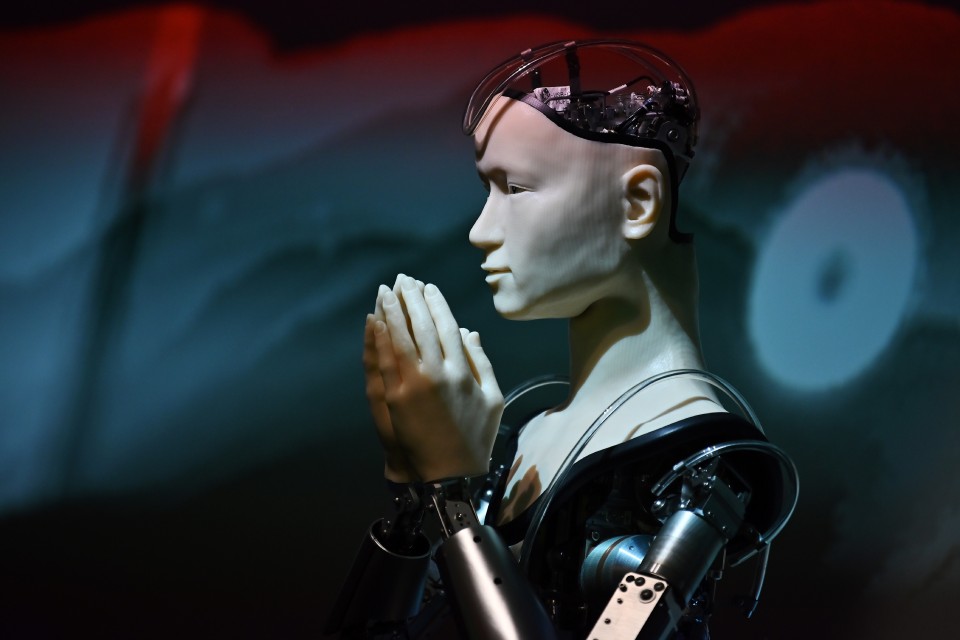
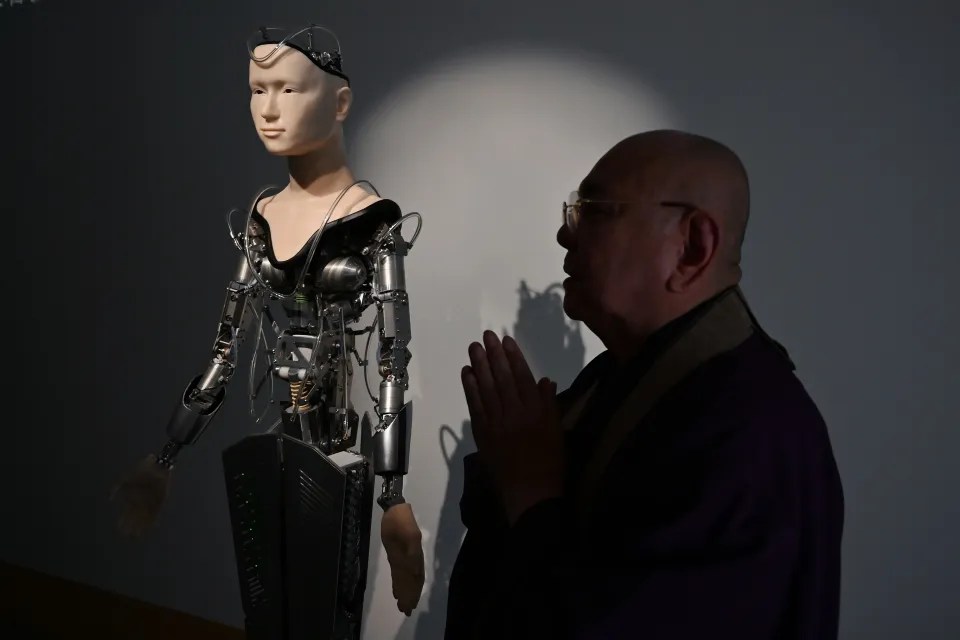
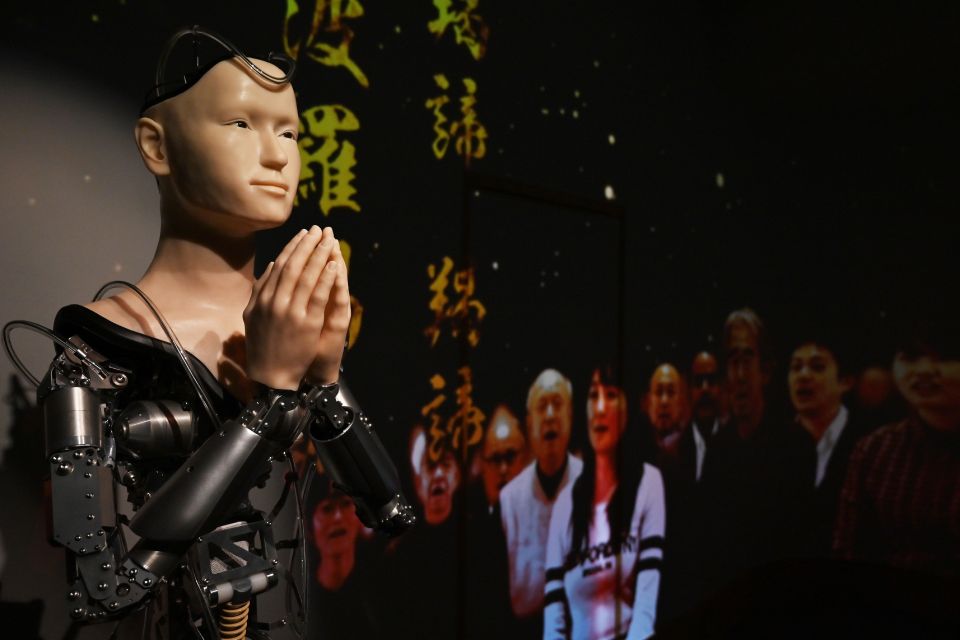
Yet the blending of powerful, lifelike AI with religion is nothing new. A striking example is the robot Mindar, who resides at Kodaiji Temple in Kyoto, Japan. Mindar stands 6 feet 4 inches tall and has been preaching at the 400-year-old temple since 2019. This unique priest has been programmed to recite the sacred Heart Sutra, a popular mantra in Buddhism. It is a humanoid robot with a silicone face and an aluminium body. Look closely and you can make out the lens of a camera watching worshippers as it recites the prayer to them.
But Mindar is not alone: Poland also has its own Catholic priest named Santo, and in China, an android monk called Xian'er recites mantras and offers guidance on matters of faith.
All of which leaves us with the great question of what happens if AI overtakes humans and becomes, in some sense, our new God.
"At that point, we could always flee to Mars, right?" we asked Benek.
His answer was chilling: "The problem with that thinking is that, if it's smart enough to take over from us, it's smart enough to follow us. Right? You can't run from that."